

alkene
- noun
- /ælˈkiːn/
- Specialized
- In organic chemistry, the simplest alkene is ethylene, which has two carbon atoms.
Examples
-
That reduces this alpha beta alkene and this also requires an ADPHH plus here.
-
We studied the hydroesterification reaction of 2-pyridylmethyl formate with alkenes using a ruthenium catalytic system to provide one-carbon elongated esters.
Blog text (17) -
Notice that what added to the alkene was this chapter Sigma bond.
-
The rotor is connected to the stator via an alkene bond that acts as an axle.
Blog text (23) -
An alkene is a hydrocarbon that contains one or more carbon-carbon double bonds.
-
During the reaction, a double bond in the alkene is broken to allow for the formation of new bonds.
Synonyms


 1
9.9
1
9.9
A simple chemical made of carbon and hydrogen with a double bond, like ethylene
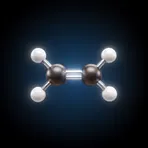
A chemical made only of hydrogen and carbon that has a double bond between carbon atoms
How Saturated

Surface Forms
Morphology
alkene = alk + ene
The term 'alkene' is a specialized chemical term not transparently derived from common English words.
Etymology
Alkene comes from the family root alk-, seen in words like alkane, plus the ending -ene, which chemists use to show a 'double bond'. So an alkene is like an alkane but with a 'double bond' between carbon atoms.