
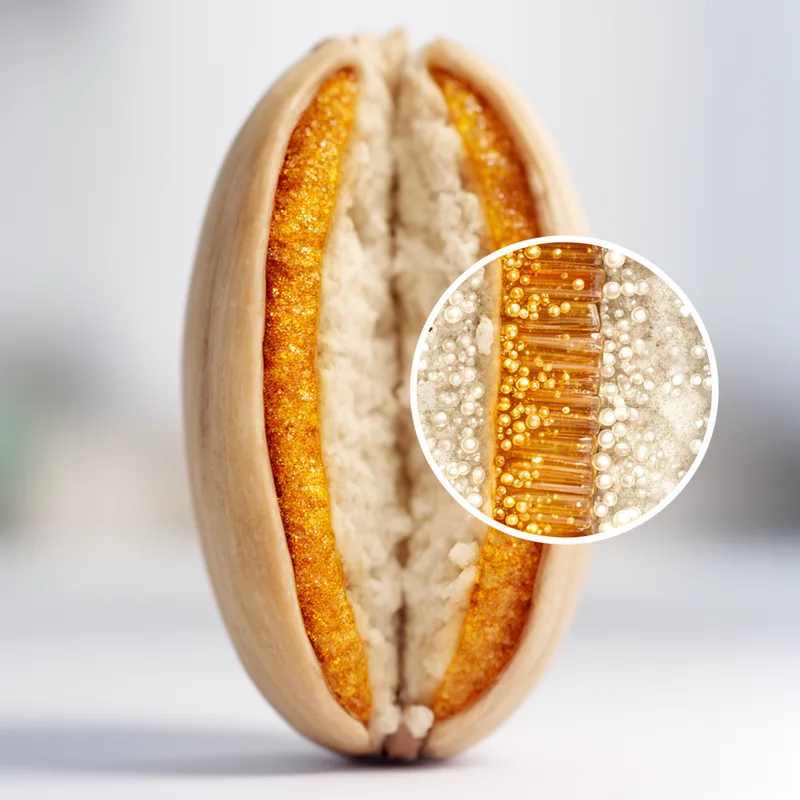
aleuronic
- adjective
- /əˈlʊərənɪk/
- Specialized
- The aleuronic layer is important in the germination process of seeds.
Examples
-
Researchers studied the distribution of aleuronic proteins in wheat grains.
-
The aleuronic layer helps protect the seed during germination.
-
Changes in the aleuronic cells can affect the nutritional value of cereals.
-
In some plants, the aleuronic content is crucial for seed viability.
-
The aleuronic layer plays a vital role in supplying nutrients to the developing seed.
-
Researchers studied the distribution of aleuronic proteins in wheat grains to enhance crop yield.
-
Changes in the aleuronic cells can affect the nutritional value of cereals, influencing their market quality.
Surface Forms
Morphology
Etymology
Aleuronic comes from aleurone, which in turn comes from the Greek aleuron meaning 'flour', because the aleurone layer looks like a fine, flour-like coating and holds protein in seeds. So aleuronic describes something relating to that protein-rich outer layer of a seed.

