
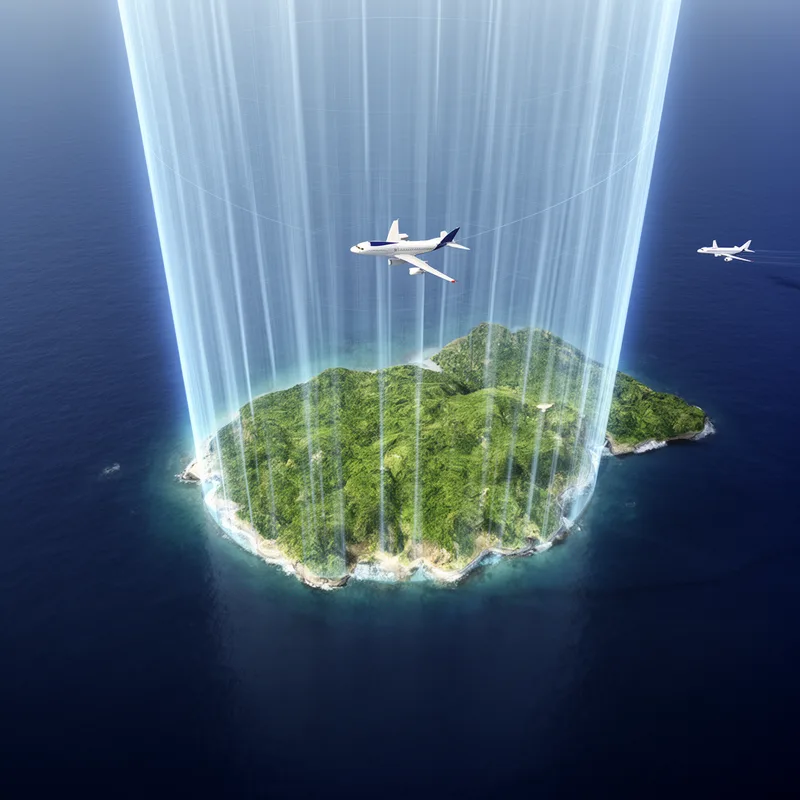
airspace
 56
4.4

- noun
- /ˈɛrˌspeɪs/
- Specialized
- In the first five months of 1994, Chinese fighters invaded Hong Kong airspace three times.
- violate airspace
- restricted airspace
- airspace violation
Loading YouTube…
Watch on YouTubeThey do not cross into the airspace of those countries.
- They do not cross into the airspace of those countries.
- So the restrictions on the airspace start high up.
- It's in a country's airspace for a matter of seconds, right?
- We pay the Air Force to secure our airspace to to keep it safe, right?
- When they hit international airspace and go back.
- And they acknowledge America has dominated the airspace over every battlefield since then.
- Who do I call to like shut down the airspace and get us air support.
- Think about how jealously they guard its airspace, right?
- We are paid to control the airspace.
- And we did a tactical ascent, which is we stayed within the airspace of Beale Air Force Base.
- Airline companies have most likely been making plans to deal with this issue, and they'll likely need to reroute around Russian airspace if banned.
- And I the, the remember the Icelandic volcano that erupted that like shut down kind of all Atlantic airspace.
- However, each nation must apply its airspace rules equally to its own and foreign aircraft operating in that airspace.
Examples
-
According to the agreements, Israeli aircraft could even use Turkish airspace for training and intelligence gathering.
Academic text (2001) -
The airline must follow strict regulations to operate safely within the controlled airspace over cities.
-
We pay the Air Force to secure our airspace to to keep it safe, right?
-
However, each nation must apply its airspace rules equally to its own and foreign aircraft operating in that airspace.
-
They do not cross into the airspace of those countries.
-
And they acknowledge America has dominated the airspace over every battlefield since then.
-
The blueprint calls for these vehicles to fly in a complex airspace, a highly integrated system of systems.
Academic text (2003) -
Soon we shall enter the sovereign airspace of Kazakhstan.
-
Planes flew constantly overhead; all military airspace had been closed to civilian traffic.
Fiction book (1990) -
Israel claimed the plane had violated Israeli airspace, while Syria claimed the flight was "far from Israeli territory."
Academic text (1991)
Surface Forms
Morphology
Etymology
Airspace is simply the two words air and space put together: air means the 'sky' or the atmosphere and space means an 'area' or 'room'. So airspace is the part of the sky above a country that the country controls.