
airshed


 1
9.2
- noun
- /ˈɛrˌʃɛd/
- Specialized
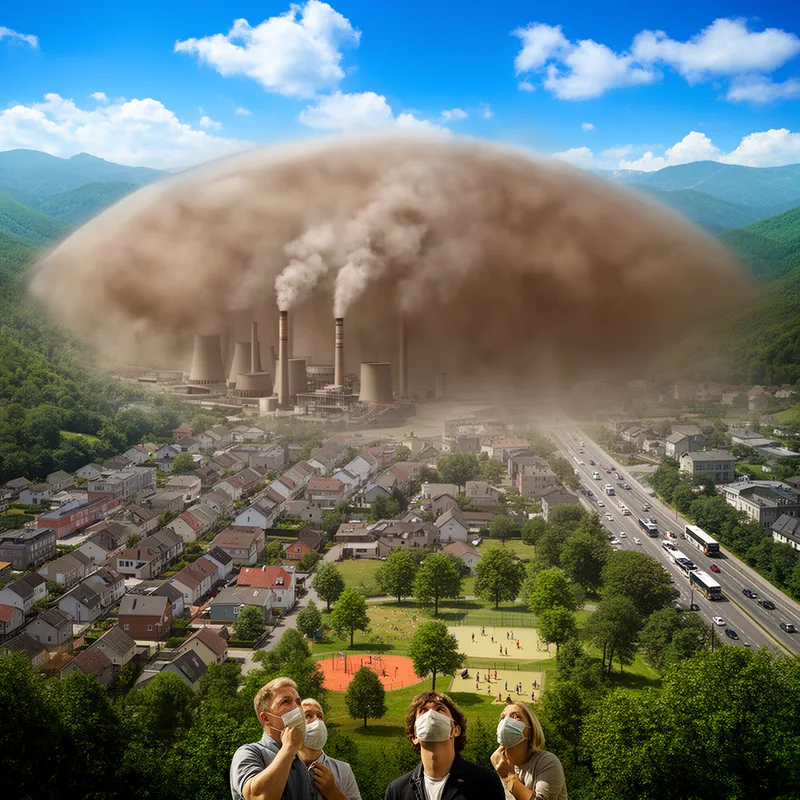
- Regulations must consider the entire airshed to effectively manage air quality and reduce harmful emissions.
Examples
-
In local airsheds, interpollutant trading has been sanctioned between NOx and VOCs in Connecticut, New Hampshire, and Maine.
Academic text (2000) -
An airshed is a region that shares a common air supply.
Academic text (2000) -
Unlike a watershed, an airshed has no physical boundaries.
Academic text (1999) -
It is possible that the airshed for some chemicals reaching the bay may include the entire eastern United States.
Academic text (1999) -
EPA has thus far mapped out an airshed only for nitrogen oxide emissions.
Academic text (1999) -
The greater the degree to which pollutants mix in the receiving airshed or watershed, the more attractive a cap-and-trade (or emission tax) system will be, relative to a conventional uniform standard.
Blog text (30) -
An airshed is a geographic area where the quality of air is uniformly influenced by shared pollution sources.
-
Environmental scientists study how pollutants travel within an airshed to develop better air quality strategies.
How Polluted

Surface Forms
Morphology
Etymology
Airshed joins air and shed, modeled on the familiar word watershed 'an area where water drains'. So, think of an airshed as an area that shares the same air and where pollution in one place can affect the whole region.