
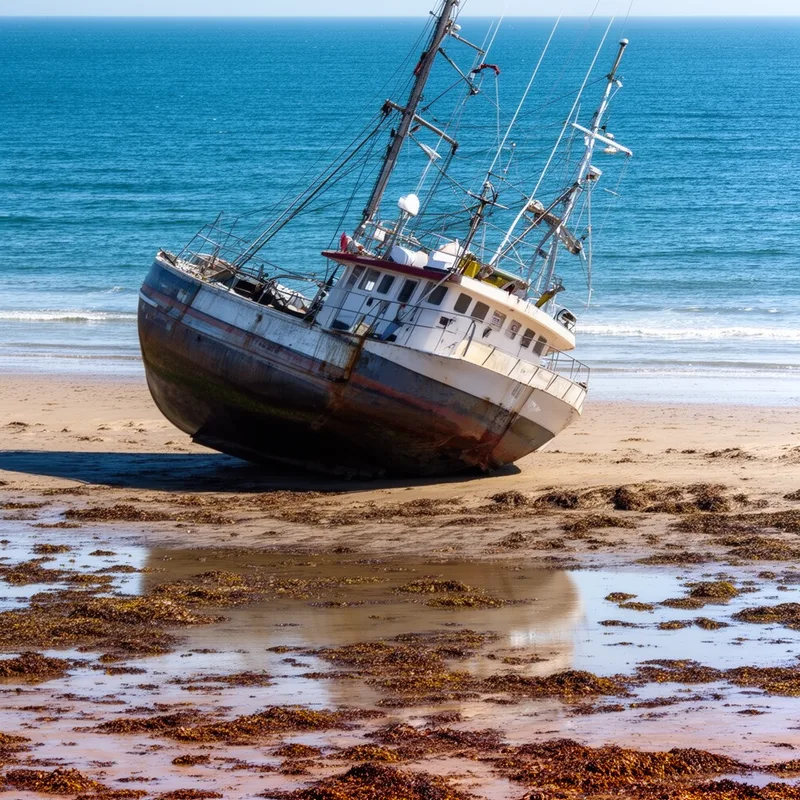
aground
 14
6.7
14
6.7

- adjective
- /əˈɡraʊnd/
- We dreaded running aground in the dark.
- run aground
- ship ran aground
- go aground
Loading YouTube…
Watch on YouTubeAnd so he decides to steer the boat too close to the shore and it goes aground and it starts to sink.
- And so he decides to steer the boat too close to the shore and it goes aground and it starts to sink.
Examples
-
After the storm, many boats were found aground on the beach, stranded until the high tide returned.
-
The fishing boat was left aground after the tide went out, unable to sail back to shore.
-
You know, Captain Cook ran aground in these waters.
-
And in the case of a ship that has run aground, repairs must be made first.
Blog text (31) -
There were civilian sea captains killed far from home when their ships ran aground on the reef.
Academic text (2005) -
And wouldn't you know it, we ran aground on a sandbar.
Fiction book (2002) -
Their four-month voyage ended when the ship ran aground in the night off Rockaway Peninsula in June.
Academic text (1993) -
A tanker has run aground... ...on the coastline, spilling millions of gallons of oil on Baby Seal Beach.
-
The cruise ship Costa Concordia partially sank on January 13, 2012, when it ran aground at Isla del Giglio, Italy.
Academic text (2016) -
Officials reported that the cargo ship ran aground, blocking the shipping lane for several hours.
Synonyms




Antonyms

How Stuck
 14
6.7
14
6.7
Surface Forms
Morphology
Etymology
Aground comes from the old a- meaning 'on' and the word ground, so it originally meant 'on the ground'. That's why aground now describes a ship or boat that is sitting on the sea bottom or shore and cannot move.