

ageratum
- noun
- /ˌædʒəˈreɪtəm/
- Look at the beautiful ageratum!
Examples
-
The garden was filled with the soft blue blossoms of ageratum.
-
Many gardeners choose ageratum for its ability to attract butterflies and add color to borders.
-
She planted ageratum alongside marigolds for a striking contrast in her flowerbeds.
-
The ageratum is lovely.
-
The garden was filled with bright ageratum, showcasing its beautiful blue flowers.
-
In the flower bed, the ageratum bloomed alongside marigolds and petunias.
-
She decided to plant ageratum in her garden to add a splash of color.
Synonyms

A small garden plant with fluffy blue or purple flowers
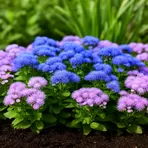
A small garden plant with fluffy blue or lavender flowers

A flowering plant with clusters of bright blue flowers that attract bees and butterflies
Compounds

- Specialized
A small shrub with yellow daisy-like flowers that grows in dry Mediterranean areas
Surface Forms
Etymology
Ageratum comes from the Greek ageratos, which means 'not aging' and is like the English word ageless. Gardeners gave the plant this name because its flowers keep their color for a long time, so ageratum is an 'ageless', long-lasting garden flower.

