
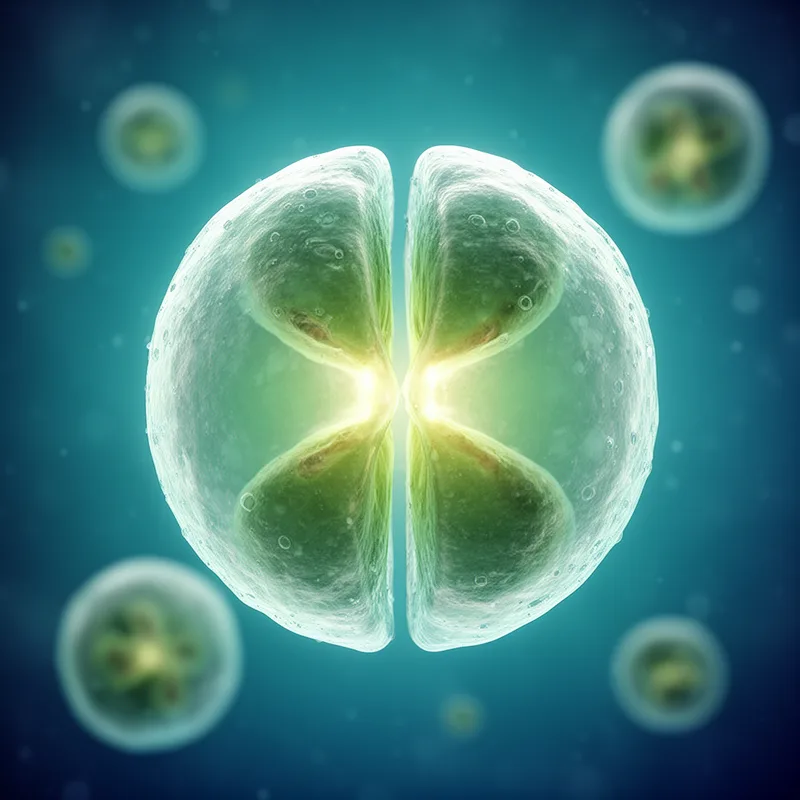
agamete
9.9
A cell that reproduces by itself without joining another cell
- noun
- /ˈæɡəˌmiːt/
- Specialized
:
agamete
- An agamete is a type of reproductive cell.
Examples
-
Under certain conditions, the algae produce agametes rather than gametes.
-
Some organisms produce agametes for asexual reproduction.
-
Some protozoa multiply by releasing agametes into their environment.
-
The study focuses on the development of agamete forms in simple multicellular organisms.
-
Some algae can generate agametes to reproduce without mating.
-
The research shows how certain plants create agametes for asexual reproduction.
-
In environments with limited resources, some species rely on agametes to ensure their survival.
Surface Forms
Morphology
Etymology
Agamete comes from Greek parts a- meaning 'not' and gamete from gamos meaning 'marriage' or 'joining', so an agamete is a cell that does not 'marry' or join with another cell when it reproduces.

