
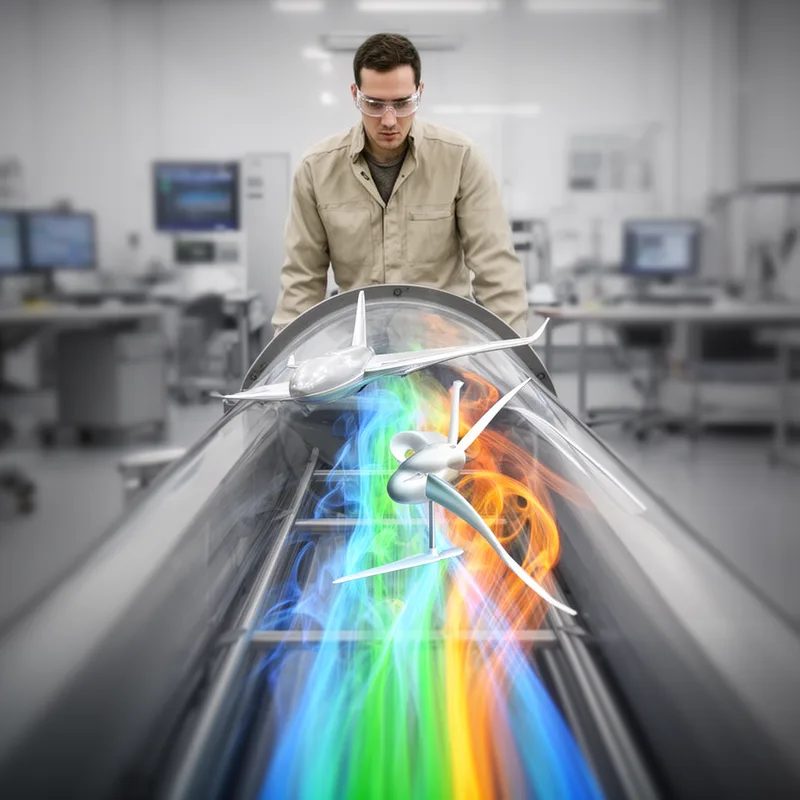
aeromechanics
- noun
- /ˌɛəroʊməˈkænɪks/
- Specialized
 :
aeromecánica
:
aeromecánica
- The study of aeromechanics helps engineers design more efficient aircraft.
Examples
-
Researchers in aeromechanics analyze how air flows over different surfaces to improve vehicle performance.
-
As a known expert in turbine engine aeromechanics, Cross has been a key contributor to keeping USAF systems flight-worthy.
Academic text (2011) -
Chopra has made pioneering contributions to rotary-wing aeromechanics, modeling of composite rotors, smart structures technology for rotor systems, and aeroelastic optimization.
Academic text (2003) -
Aeromechanics is crucial for understanding how aeromechanics helps airplanes navigate through the atmosphere.
Synonyms

 11
6.2
11
6.2

The study of how air moves and affects things like planes and cars


 1
4.7
1
4.7
The study of how liquids and gases move and the forces that act on them
Surface Forms
Morphology
Etymology
The word aeromechanics joins aero- meaning 'air', the same aero- you find in aeroplane, with mechanics meaning 'movement' or how things move, as in mechanic. So aeromechanics is the study of how air moves and how that movement affects objects like aircraft and turbine blades.