
adiabatic
 4
9.9
4
9.9

- adjective
- /ˌeɪdiˈæbətɪk/
- Specialized
- The adiabatic expansion of gas is a key concept in understanding how engines operate efficiently.
- adiabatic temperature
- adiabatic lapse
- adiabatic temperature change
Loading YouTube…
Watch on YouTubeIt's purely a mechanical process of expanding the air and watching it cool because of that adiabatic expansion.
- It's purely a mechanical process of expanding the air and watching it cool because of that adiabatic expansion.
Examples
-
The adiabatic temperature change that accompanies such vertical displacements is determined by the adiabatic temperature lapse rate.
Academic text (2012) -
You then have an adiabatic lapse rate all the way to the ground.
Blog text (18) -
And the adiabatic cooling must have been too great.
-
There is therefore no adiabatic heating of an atmosphere as a result of gravity.
Blog text (18) -
And so our subject is adiabatic approximation.
-
And under those circumstances, adiabatic also means constant entropy.
-
The adiabatic lapse rate of moist air, ?m, is less than ?d.
Academic text (2012) -
Process 3-4 is essentially a throttling step, consisting of adiabatic expansion through a valve.
Academic text (1994) -
In that situation, the adiabatic displacement of saturated air would make the air warmer than its surroundings and hence unstable.
Academic text (2012) -
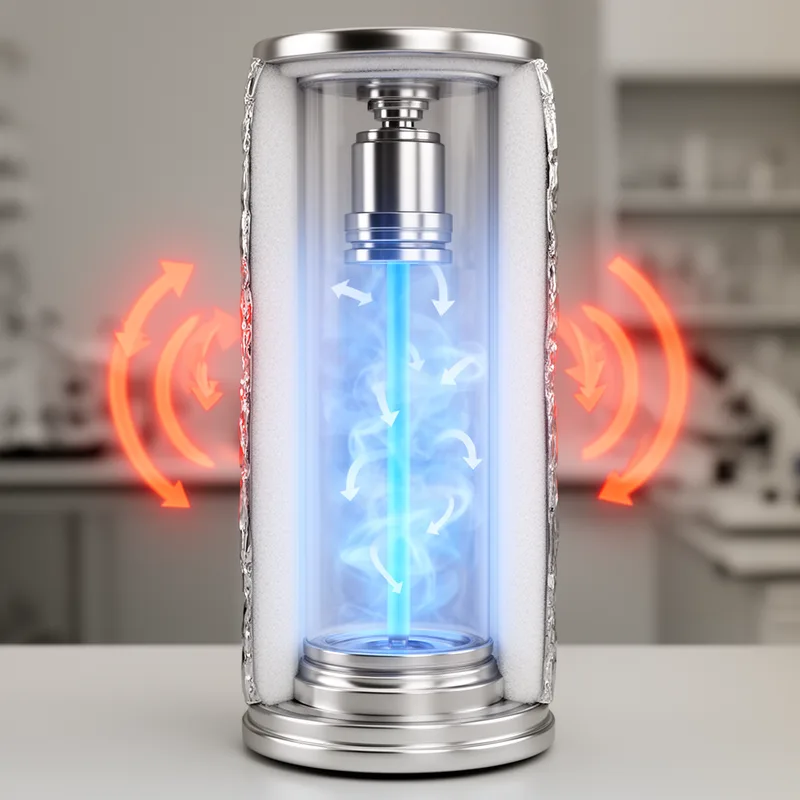
In thermodynamics, an adiabatic process occurs without heat exchange between the system and its surroundings.
Antonyms

Compounds

- Specialized
A number comparing how much heat a gas holds at fixed pressure and fixed volume
- Specialized
A process in which no heat moves into or out of a system, for example when a gas expands quickly
How Diabatic
- Specialized

- Specialized
4
9.9
Surface Forms
Morphology
Etymology
Adiabatic comes from Greek parts: a- meaning 'not' and diabatos meaning 'passable' or 'to pass through'. So an adiabatic process is one where heat does 'not pass through' to the surroundings, which is why no heat is lost or gained.