

aculeated feature
- noun
- /əˈkjuːliˌeɪtɪd ˈfiːtʃər/
- Specialized
- The bee's aculeated feature can deliver a painful sting.
Examples
-
The wasp's aculeated feature enables it to deter predators effectively.
-
Some plants have developed aculeated features to deter herbivores.
-
Many desert plants have evolved aculeated features to protect themselves from herbivores.
-
The scientist pointed out the aculeated feature on the insect's tail during the lecture.
-
Many desert plants have evolved aculeated features to protect themselves from herbivores.
-
The wasp's aculeated feature enables it to deter predators effectively.
-
The scientist pointed out the aculeated feature on the insect's tail during the lecture.
Synonyms
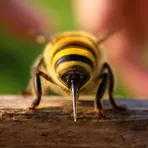
A sharp, pointed sting that a bee or wasp uses to defend itself

A sharp, pointed edge on leaves or surfaces that keeps animals away

A sharp point on an animal or plant that protects it

A thin needlelike part like a spine found in plants, animals, and crystals
Antonyms


How Harmful

Surface Forms
Morphology
If a learner knows 'aculeated' as 'having sharp, needle-like projections' and 'feature' as 'a distinguishing trait', the combined meaning 'a trait that is sharp or bears needle-like projections' is directly derivable. The structure is a regular adjective + noun composition and follows common cross-linguistic patterns, so it is immediately comprehensible to learners who know both constituents.
Etymology
Aculeated feature names a sharp part on a plant or insect, like a cactus spine or a wasp's sting. These aculeated features are used to 'defend' or to 'sting', so the phrase means a sharp or stinging structure used for protection.