
actinic keratosis


 1
7.7
1
7.7
- noun
- /ækˈtɪnɪk kəˈreɪtəʊsɪs/
- Specialized
- If left untreated, actinic keratosis may develop into skin cancer over time.
- actinic keratoses (AKs)
Examples
-
She has a diagnosis of actinic keratosis on her forehead.
-
After years of working outdoors, he developed actinic keratosis on his hands and face.
-
Dermatologists recommend regular skin checks to detect any signs of actinic keratosis early.
-
Wearing sunscreen can help prevent actinic keratosis and other sun-related skin problems.
-
The doctor explained that actinic keratoses can develop from sun exposure.
-
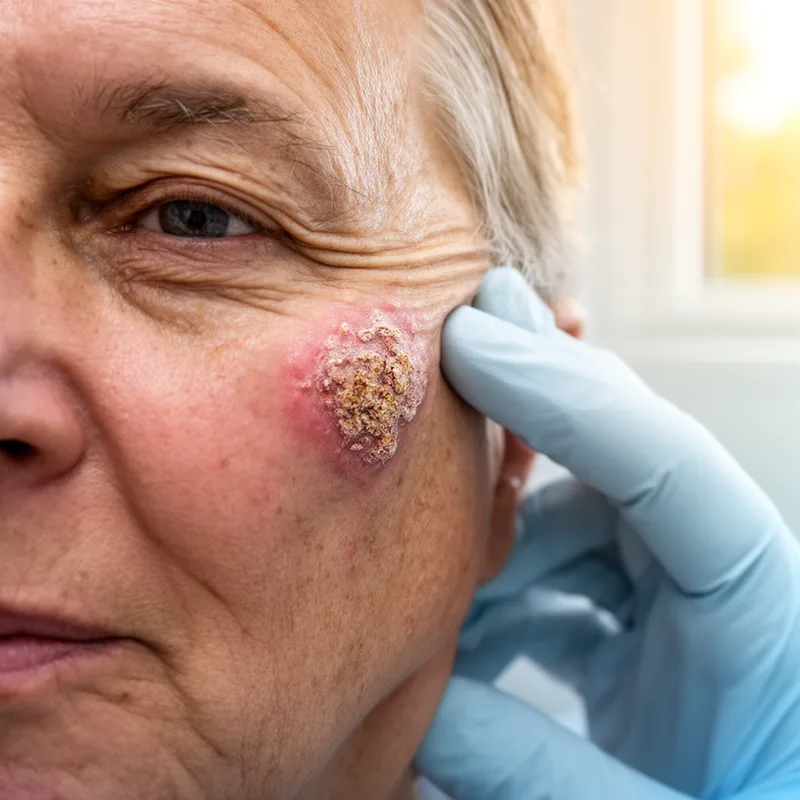
A rough, scaly patch on the skin, known as actinic keratosis, can develop after long-term sun exposure.
-
Dermatologists often recommend treatments for actinic keratosis to prevent potential skin cancer.
Synonyms
 1
9.9
1
9.9
A rough, thick patch on the skin where the outer layer grows too much
Surface Forms
Morphology
Both constituents are semantically compositional: 'actinic' refers to radiation (commonly sunlight) that causes chemical changes and 'keratosis' denotes an overgrowth of the outer skin layer. Combined they transparently indicate a skin overgrowth caused by radiation, so a learner who knows both words can infer the meaning despite its medical register.
Etymology
Actinic keratosis comes from two medical words: actinic meaning 'from sun rays' and keratosis meaning 'a rough, hard patch' of skin. The name gives a clear image of skin made rough by long sun exposure, which is why it refers to those sun-damaged spots that can sometimes 'turn into cancer'.