
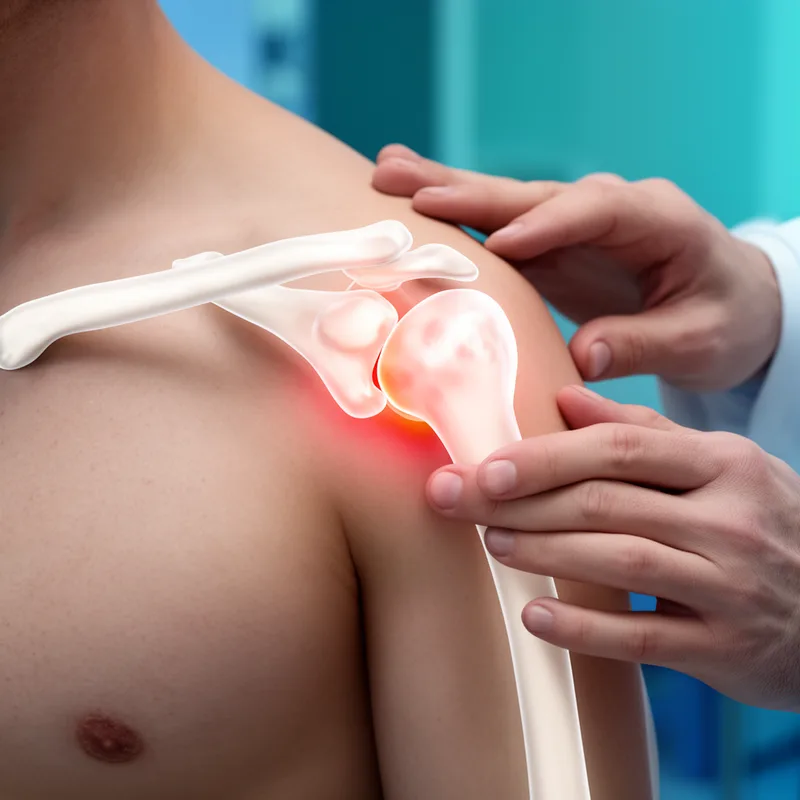
acromioclavicular


 1
9.9
- adjective
- /ˌeɪkrəˌmiːoʊkləˈvɪkjələr/
- Specialized
- Lambers Heerspink et al. have reported age, WCB status, multiple tendon involvement, tear size, acromioclavicular joint, or biceps involvement as possible predictors.
- acromioclavicular joint
Examples
-
There are 4 joints that make up the shoulder complex: the glenohumeral (GH) joint, acromioclavicular joint, sternoclavicular joint, and the functional scapulothoracic articulation.
Academic text (2016) -
Non-weight-bearing joints, such as the carpometacarpal and acromioclavicular joints, seem to do better on a long-term basis with corticosteroid treatment than weight-bearing joints (Wiggins et al., 1994).
Academic text (2002) -
There was even one case report of migration of a K-wire from the acromioclavicular joint to the spleen.
Academic text (2007) -
Both passive and active range of motion are evaluated, and a detailed examination of the shoulder girdle includes inspection and palpation of the acromioclavicular and sternoclavicular joints.
Academic text (2003) -
The athlete felt intense pain in his shoulder due to an acromioclavicular injury after the fall.
-
After the accident, the doctor diagnosed her with a sprain in the acromioclavicular joint.
-
Physical therapy focused on strengthening the muscles around the acromioclavicular area to improve mobility.
Surface Forms
Morphology
Etymology
Acromioclavicular comes from the parts acromion meaning 'top' of the shoulder and clavicle meaning 'collarbone'. Acro- means 'top', as in acrobat, so the word names the joint where the collarbone meets the top of the shoulder.