
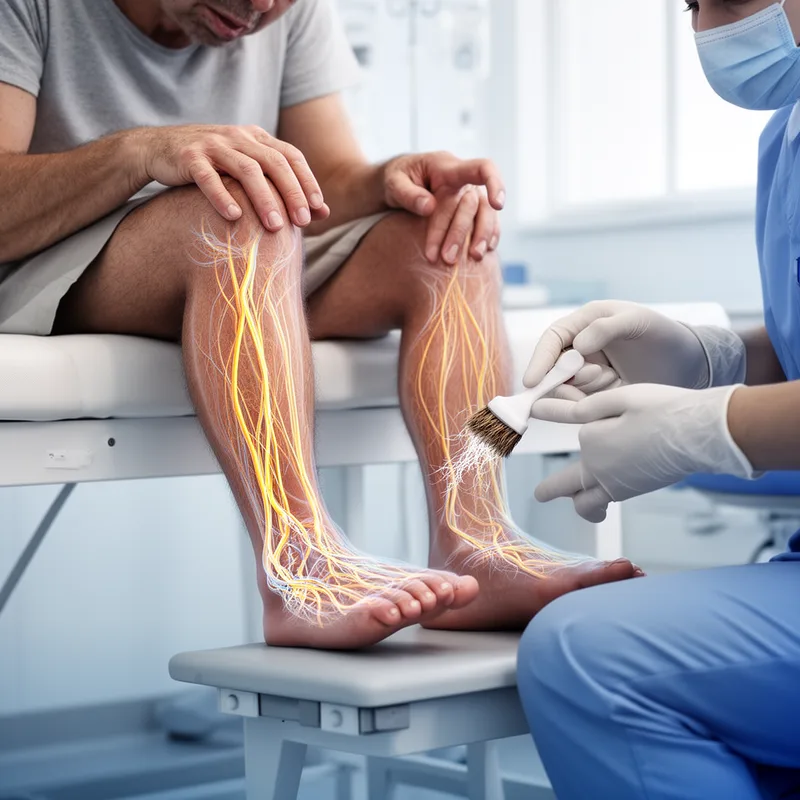
acroanesthesia
- noun
- /ˌækrəʊəˈniːsθiə/
- Specialized
- Long-term diabetes can sometimes lead to acroanesthesia as a result of nerve damage.
Examples
-
The patient reported acroanesthesia in his fingers and toes after exposure to extreme cold.
-
Doctors monitored the progression of acroanesthesia to assess the severity of the patient's neuropathy.
-
The patient experienced acroanesthesia after the surgery.
-
He was diagnosed with acroanesthesia in his left foot.
-
The patient reported acroanesthesia in his fingers and toes after exposure to extreme cold.
-
Long-term diabetes can sometimes lead to acroanesthesia as a result of nerve damage.
-
Doctors monitored the progression of acroanesthesia to assess the severity of the patient's neuropathy.
Synonyms
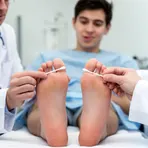
Less feeling in a part of the body when touched
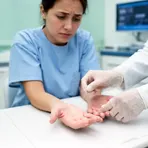
A reduced feeling in part of the body often caused by nerve damage
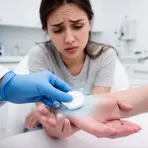
A problem with feeling touch that makes the skin feel numb or strange
How Severe
- Specialized
 81
4.5


- Specialized
19
4.6
- Specialized
Surface Forms
Morphology
acroanesthesia = anesthesia (semi-transparent) = acro + anesthesia
Formed by adding the combining form 'acro-' (extremities) to 'anesthesia'; the medical combining form 'acro-' is specialized and may be unfamiliar to average learners.
Etymology
Acroanesthesia combines acro- meaning 'tip' or 'outer part' (think of an acrobat who works at the top) and anesthesia meaning 'no feeling'. So acroanesthesia literally means 'no feeling in the tips', which explains why it describes loss of sensation in the hands or feet.