
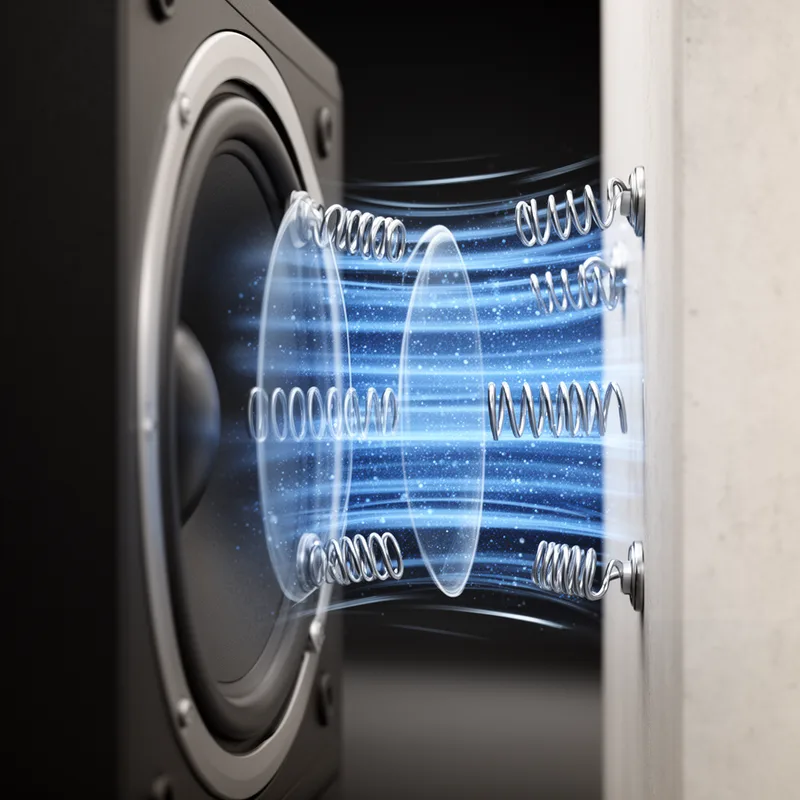
acoustic reactance
- noun
- /əˈkuːstɪk rɪˈæktəns/
- Specialized
- An increase in acoustic reactance can reduce the efficiency of loudspeakers.
Examples
-
Engineers measure acoustic reactance to design better soundproofing materials.
-
The shape of the wall affects the acoustic reactance in a concert hall.
-
The acoustic reactance affects sound wave propagation.
-
In audio engineering, acoustic reactance is crucial.
-
An increase in acoustic reactance can reduce the efficiency of loudspeakers.
-
Engineers measure acoustic reactance to design better soundproofing materials.
-
The shape of the wall affects the acoustic reactance in a concert hall.
Surface Forms
Morphology
The phrase composes a clear modifier 'acoustic' with the technical noun 'reactance', so the meaning — a form of opposition affecting sound — is compositionally inferable as reactance applied to acoustics. However, 'reactance' is a specialized, frequency-dependent technical term and the acoustic mechanisms (inertia/elasticity vs. resistive loss) require domain knowledge, making the relation only partially obvious to non-specialist learners.
Etymology
Acoustic reactance links acoustic meaning 'sound' and reactance meaning 'a push back'. Think of sound moving past springs or heavy weights that push back without using up the sound's energy, so acoustic reactance is the 'opposition' to sound that comes from those push-back effects, not from real energy loss.

