
acinic


 1
9.9
- adjective
- /əˈsɪnɪk/
- Specialized
- Our findings support the view that acinic cell carcinoma can occur at any age (as early as 14 years) but that it is more common among patients in midlife.
- acinic cell carcinoma
- acinic cell
Examples
-
Most acinic cell carcinomas occur between the ages of 40 and 49 years.
Academic text (2005) -
Most published series of patients with acinic cell carcinoma are limited, and they represent the experiences of institutions rather than individual surgeons.
Academic text (2005) -
Acinic cell carcinomas rarely occur in the minor salivary glands.
Academic text (2005) -
The course of acinic cell carcinoma of the parotid gland following surgical and nonsurgical interventions is variable.
Academic text (2005) -
Therefore, we conclude that acinic cell carcinoma can be successfully treated with a superficial or total parotidectomy with sparing of the facial nerve.
Academic text (2005) -
With regard to the prevalence of parotid gland cancers in children, acinic cell carcinoma is second only to mucoepidermoid carcinoma.
Academic text (2005) -
Acinic cell carcinoma is a rare type of cancer that originates in the glandular tissues.
-
The acinic cells in the parotid gland produce saliva, making them essential for digestion.
-
Doctors often study acinic cell carcinoma to improve treatment options for affected patients.
Synonyms
 1
9.8
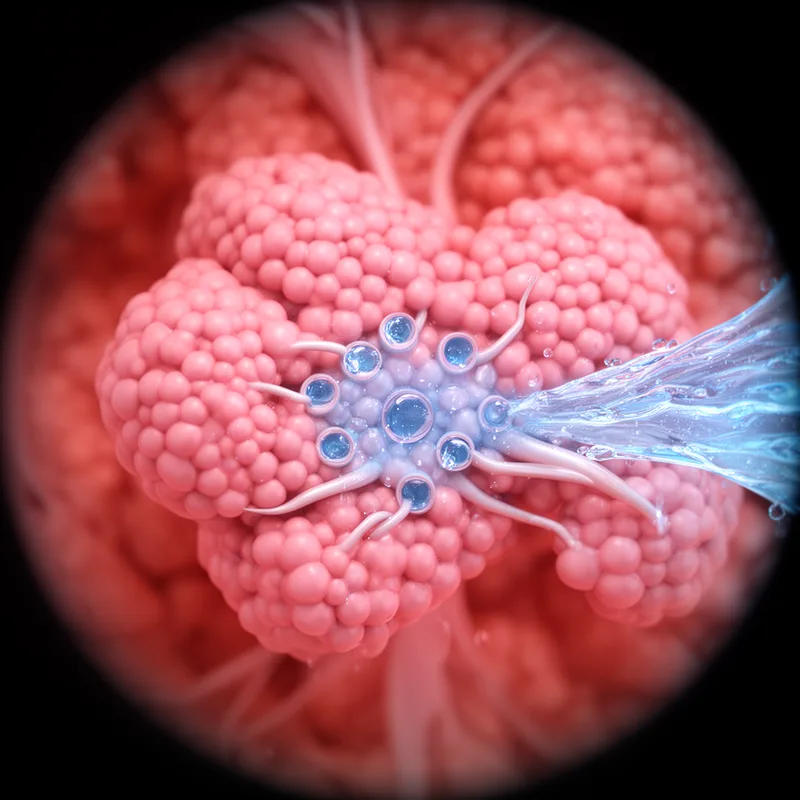
Small sac-like parts of a gland that make and release fluids

Relating to small bag-like parts inside some glands

Having many small pouch-like parts, as in some glands
Surface Forms
Morphology
Etymology
Acinic comes from the Latin word acinus, which means 'berry' or 'grape', because the tiny sac-like parts of some glands look like little berries. So, acinic means 'relating to' or 'like' those small berry-shaped sacs in a gland.