
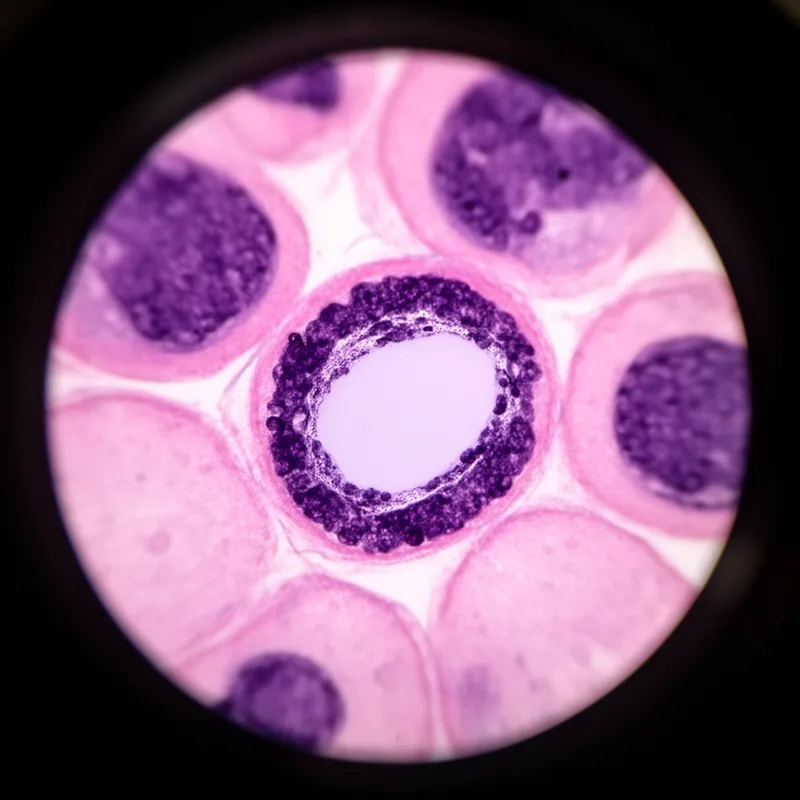
achromatin
- noun
- /ˌeɪkroʊˈmeɪtɪn/
- Specialized
- Under the microscope, the achromatin appeared as a pale area in the cell nucleus.
Examples
-
In stained tissue sections, achromatin can be distinguished from darker, chromatin-rich regions.
-
Scientists study achromatin to understand its role in genetic regulation.
-
The achromatin region is essential for cell function.
-
What is achromatin?
-
Under the microscope, the achromatin appeared as a pale area in the cell nucleus.
-
In stained tissue sections, achromatin can be distinguished from darker, chromatin-rich regions.
-
Scientists study achromatin to understand its role in genetic regulation.
Surface Forms
Morphology
Etymology
Achromatin comes from the Greek parts a- meaning 'not' and chroma meaning 'color', the same root you see in chromosome and chrome. So, achromatin is the part of a cell nucleus that does not take color when stained and therefore looks pale under the microscope.

