
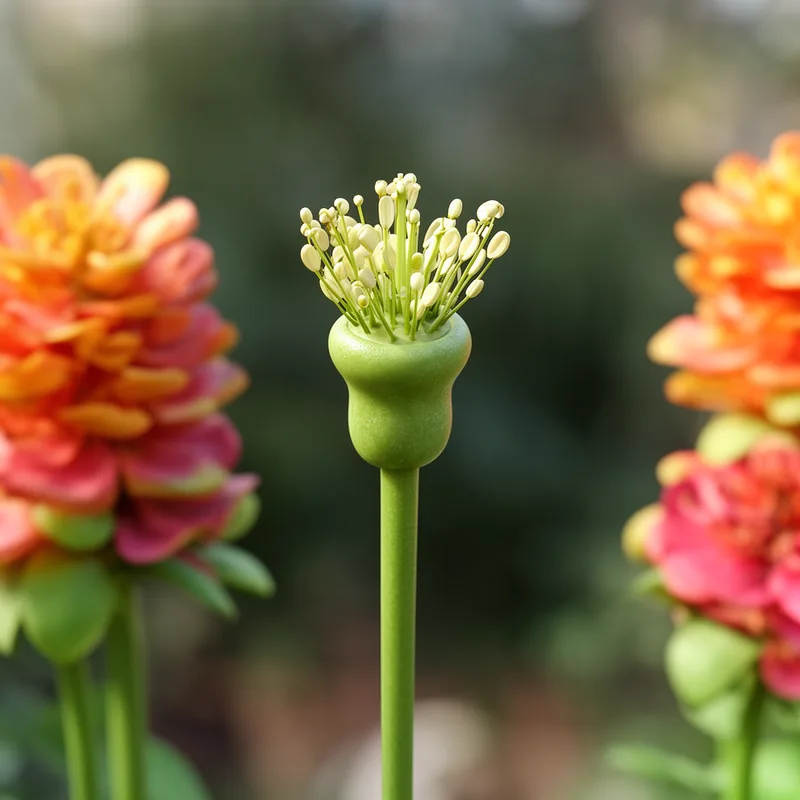
achlamydeous
- adjective
- /ˌeɪkləˈmaɪdiəs/
- Specialized
- Botanists often describe flowers without petals or sepals as achlamydeous.
Examples
-
Some primitive flowering plants are classified as achlamydeous because they lack a true perianth.
-
Is the flower achlamydeous or does it have a perianth?
-
The identification key noted whether the specimen was achlamydeous or possessed a distinct floral envelope.
-
The achlamydeous species of plants have unique reproductive strategies.
-
Botanists often describe flowers without petals or sepals as achlamydeous.
-
Some primitive flowering plants are classified as achlamydeous because they lack a true perianth.
-
The identification key noted whether the specimen was achlamydeous or possessed a distinct floral envelope.
Antonyms
Surface Forms
Morphology
achlamydeous = chlamydeous (opaque) = a + chlamyd + eous
Formation by the privative prefix 'a-' added to the adjective 'chlamydeous' is a regular, recoverable morphological step.
Etymology
The word achlamydeous comes from Greek parts a- 'without' and chlamys 'cloak', a helpful image for a flower with no covering. So an achlamydeous flower lacks the usual 'cloak' of petals or sepals.

