
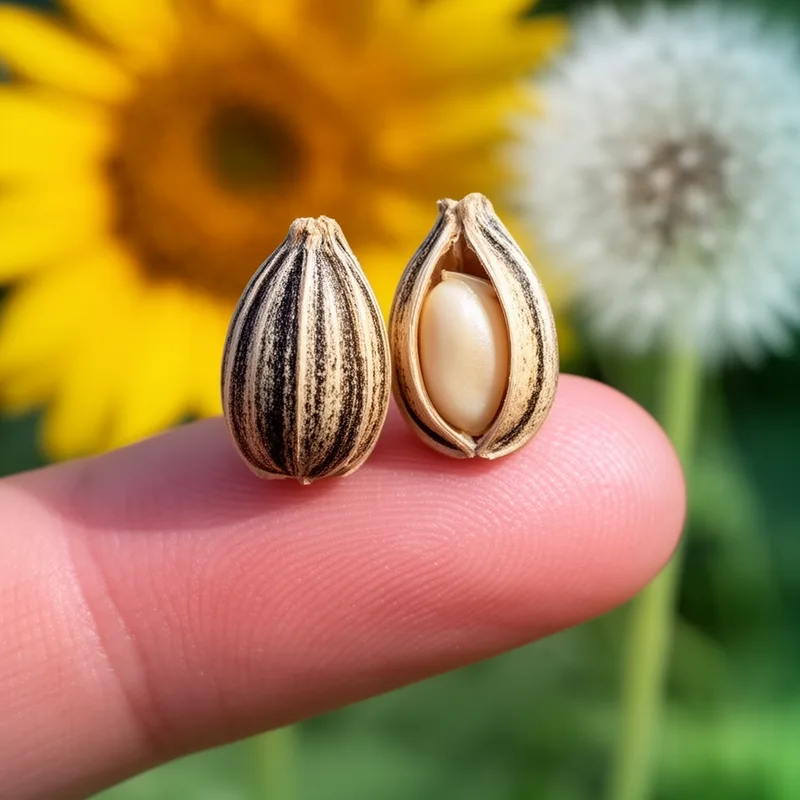
achene
- noun
- /əˈkiːn/
- Specialized
- After harvesting, I saved some of the achenes to plant for next year's garden.
Examples
-
Second, the downward-facing heads of sunflower plants prevent a repellent from reaching the achenes through aerial application, the preferred method of crop treatment.
Academic text (2011) -
Birds can easily access sunflower achenes by perching on the head.
Academic text (2011) -
Once we have a count of achenes for each head, we select a random sample for weighing.
Blog text (21) -
Here is Aldo, using the computer to count achenes from a scanned image:
Blog text (21) -
Here is Char, randomizing achenes based on a numbered grid:
Blog text (21) -
Since I arrived, the two major tasks for the volunteers have been counting, randomizing, and weighing achenes from heads collected in 2011.
Blog text (21) -
This equipment should enable pesticide applicators to achieve better coverage of the achenes than is possible with low-volume aerial applications (Mullally 2010).
Academic text (2011) -
Moreover, the captures occurred after the crop had reached physiological maturity and after the achenes had become less palatable, and so the risk for substantial damage had subsided.
Academic text (2011) -
Blackbird damage begins after the ray petals drop from the ripening sunflower heads in late August, and the peripheral rows of achenes begin to develop (Figure 2).
Academic text (2011) -
The sunflower produces numerous achenes that are small and dry, each containing a seed.
Surface Forms
Etymology
Achene came into English from older scientific names in French and Latin, and before that from Greek. So, an achene is a tiny dry fruit that stays 'closed', keeping the 'seed' separate rather than opening to release it.

