
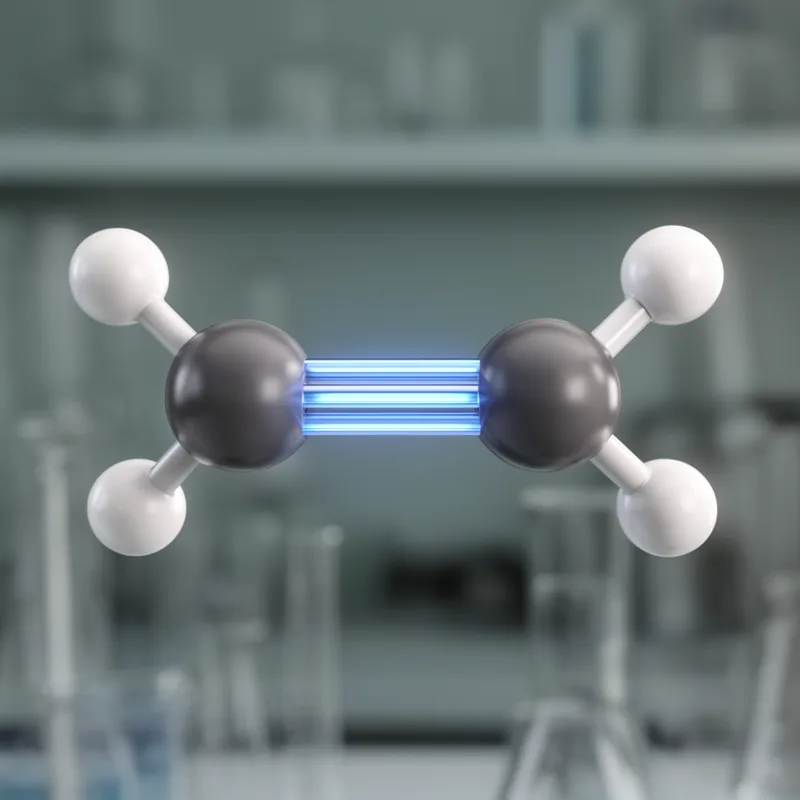
acetylenic


 1
9.9
- adjective
- /əˌsɪtɪˈlɛnɪk/
- Specialized
- They observed strong reactivity when acetylenic groups were introduced to the molecule.
Examples
-
The chemist synthesized an acetylenic compound as part of his research project.
-
The chemist studied the acetylenic compounds in detail.
-
Many acetylenic hydrocarbons are used in organic synthesis.
-
Acetylenic bonds are known for their strength.
-
Acetylenic compounds are essential in the production of synthetic rubber.
-
The chemist studied the properties of acetylenic bonds in organic molecules.
-
Many acetylenic reactions are used to form complex chemical structures.
Surface Forms
Morphology
Etymology
Acetylenic comes from acetylene, the name of a reactive gas; acetylene contains the part acetic, from a word for 'vinegar', and the ending -ene used for certain chemical compounds. The ending -ic means 'relating to', so acetylenic means 'relating to acetylene', that is, describing molecules that have the strong triple carbon-carbon bond and act like acetylene.