
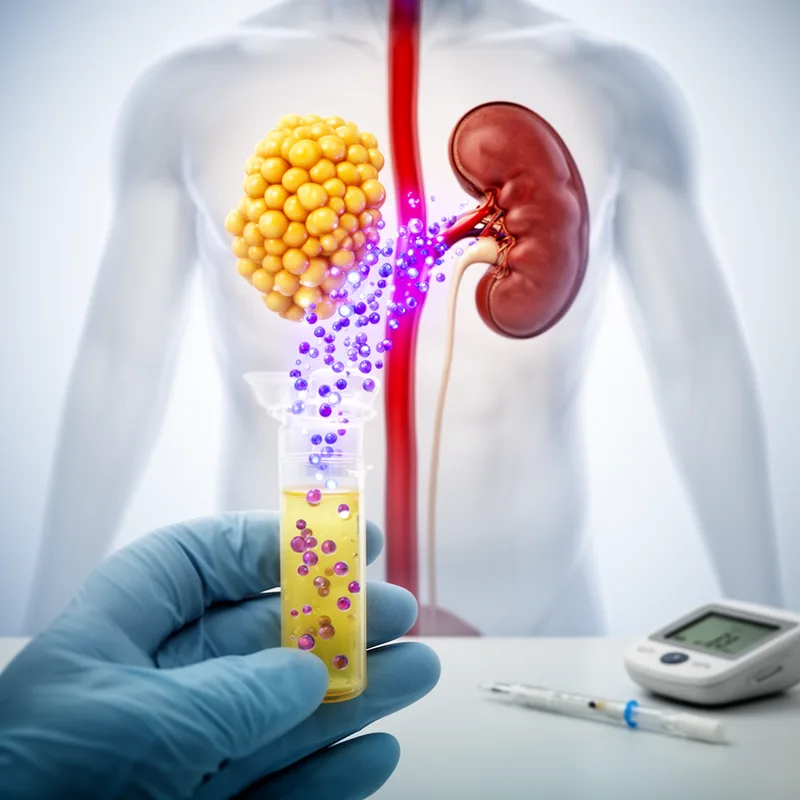
acetone body
- noun
- /ˈæsɪˌtoʊn ˈbɑdi/
- Archaic
- The doctor explained that high levels of acetone bodies might indicate uncontrolled diabetes.
Examples
-
During starvation, the body produces more acetone bodies as it breaks down fat for energy.
-
Laboratory tests revealed the presence of acetone bodies in the patient's urine sample.
-
High levels of acetone bodies can indicate a metabolic disorder.
-
Patients with diabetes often have elevated acetone bodies in their urine.
-
During starvation, the body produces more acetone bodies as it breaks down fat for energy.
-
Laboratory tests revealed the presence of acetone bodies in the patient's urine sample.
-
The doctor explained that high levels of acetone bodies might indicate uncontrolled diabetes.
Synonyms
 1
6.6
1
6.6

Small chemicals made in the liver when the body burns fat for energy
Surface Forms
Morphology
acetone + body
The term is compositionally related to its parts (acetone = a ketone chemical; body = a class/group of substances), but it is a technical biochemical term using a specialized sense of 'body' that differs from the common B1 meaning ('main part of an object'). An average B1 learner who knows the constituent words would likely not be able to infer the specific metabolic/ketone-compound meaning without domain knowledge, so the relation is only partially transparent.
Etymology
Acetone body comes from a simple picture: these are small, acetone-like chemicals (so acetone) that appear in the body when it is 'burning fat' for energy. So the name means these chemicals show up in the blood or urine when someone is starving or has uncontrolled diabetes.