
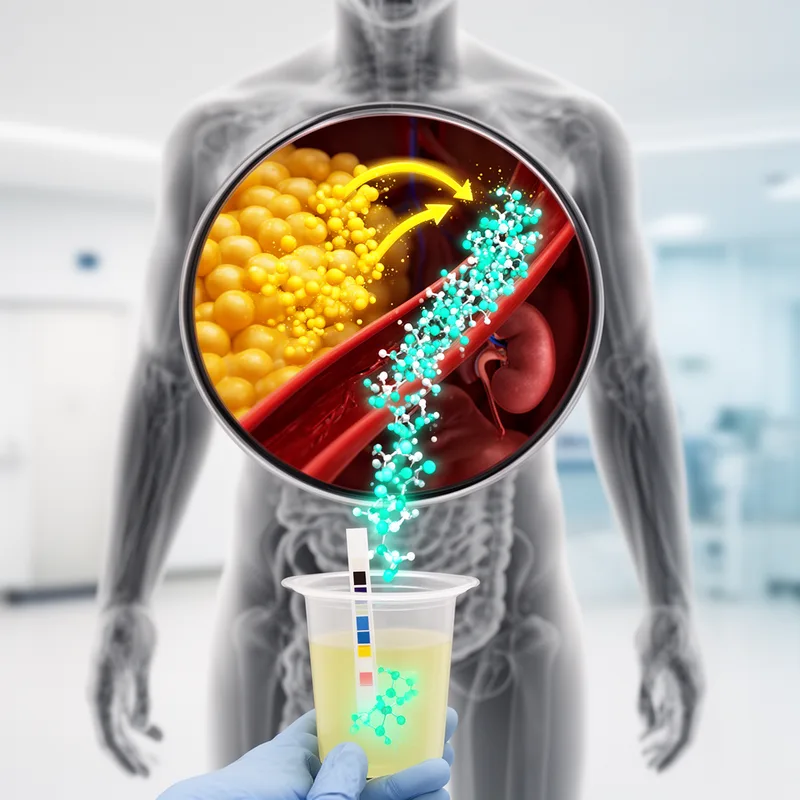
acetoacetate


 1
9.4
- noun
- /əˌsiːtoʊəˈsɛteɪt/
- Specialized
- The liver produces acetoacetate as an important ketone body during fasting.
Loading YouTube…
Watch on YouTubeThe body will produce ketone bodies which are acetoacetate and beta hydroxybutyrate.
- The body will produce ketone bodies which are acetoacetate and beta hydroxybutyrate.
Examples
-
The body will produce ketone bodies which are acetoacetate and beta hydroxybutyrate.
-
In the laboratory, chemists often use acetoacetate as a building block for synthesizing various compounds.
-
All right, the body does this, though it's making the acetoacetate is a way to give food to the brain.
-
So the good news is the the the acetoacetate di Ester actually can be put into a capsule.
-
So when you pee on these, you are you're what this is detecting is acetoacetate being expelled in the urine.
-
Some can only make stuff, acetyl COA acetoacetate that can be used to generate ketones.
-
When the body breaks down fats, it generates acetoacetate to provide energy to cells.
Synonyms
 1
6.6
Small chemicals made in the liver when the body burns fat for energy
 1
7.4
An acid that appears in blood and urine during diabetes or starvation
Small chemicals made when the body breaks down fat for energy, often seen in blood or urine during diabetes
Surface Forms
Morphology
Etymology
Acetoacetate comes from aceto-, from Latin acetum meaning 'vinegar' or 'acid', and the ending -ate meaning 'salt'. The repeated aceto- shows it is closely linked to acetic acid. So acetoacetate is an 'acetate' form of that acid, which explains why the body makes it when breaking down fat and why doctors can detect it in urine as a salt or ion.