

acetanilide
- noun
- /ˌæsɪˈtænɪˌlaɪd/
- Specialized
- Acetanilide was one of the first synthetic fever-reducing drugs, though its use has declined due to side effects.
Examples
-
The laboratory ordered a shipment of acetanilide for use in their research on dye synthesis.
-
Exposure to acetanilide in large amounts can cause toxic effects, so proper safety measures are essential.
-
The laboratory uses acetanilide for various experiments.
-
Many acetanilides are synthesized for industrial purposes.
-
Acetanilide was once widely used in medicine but is now less common due to its side effects.
-
The chemist studied the properties of acetanilide to determine its effectiveness in creating dyes.
-
In the laboratory, acetanilide is used as a precursor in the synthesis of various pharmaceutical compounds.
Synonyms
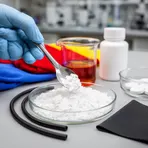
A white solid chemical used to make dyes and rubber products and related to the pain medicine paracetamol

A white solid with no smell once used for pain and now made into dyes and rubber chemicals
Surface Forms
Morphology
acetanilide = anilide (opaque) = acet + anilide
A specialized chemical formation using technical combining forms ('acet-' and 'anilide') that is not derivable by a general B1 learner from the base words.
Etymology
Acetanilide comes from two parts: acet- from the word 'acetic', which means 'vinegar' or 'acid', and aniline, named after 'anil', the old word for the indigo dye. So acetanilide literally names a chemical made by joining an 'acet' part to an 'aniline' part, which helps explain why it is used in dyes and medicines.

