
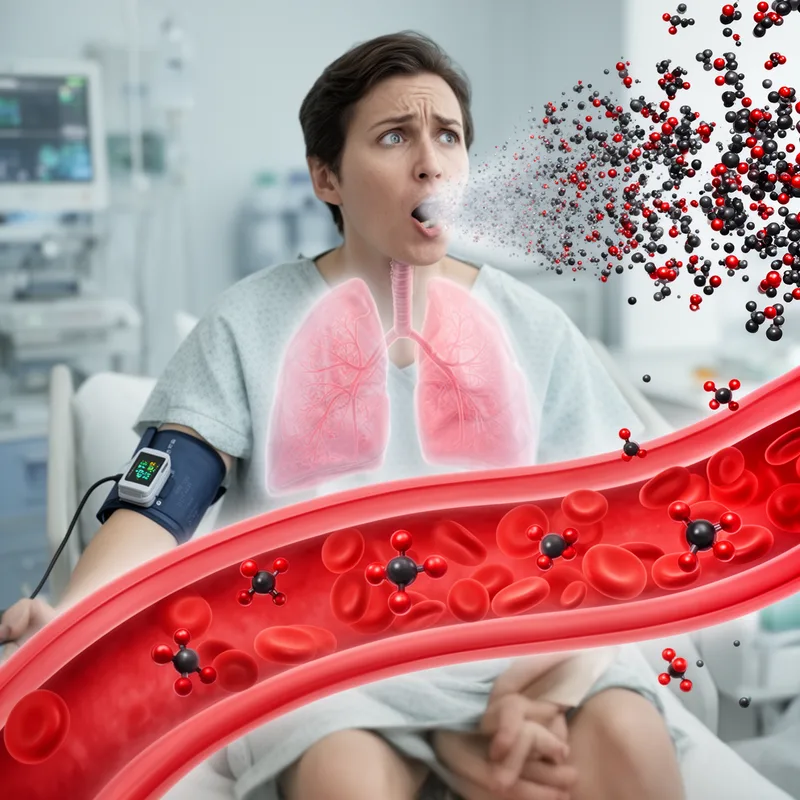
acapnic
- adjective
- /ˌeɪkəpˈnɪk/
- Specialized
- Arterial blood gas analysis revealed an acapnic state after the patient hyperventilated.
Examples
-
The technician noted that the respiratory therapy caused the patient to become acapnic.
-
Acapnic conditions may present in patients with acute anxiety and rapid breathing.
-
The patient was diagnosed with an acapnic condition.
-
Acapnic symptoms can lead to serious health issues.
-
Acapnic conditions may present in patients with acute anxiety and rapid breathing.
-
The technician noted that the respiratory therapy caused the patient to become acapnic.
-
Arterial blood gas analysis revealed an acapnic state after the patient hyperventilated.
Synonyms
A state in which the blood has less carbon dioxide than normal

A state in which the blood has too little carbon dioxide
Antonyms



How Low
- Specialized

- Specialized

 1
9.9
Surface Forms
Morphology
acapnic = acapnia (semi-transparent) = a + capn + ic
The adjective is formed in a regular way from the medical noun 'acapnia' by adding the productive suffix '-ic', so the relation is morphologically regular.
Etymology
Acapnic breaks into a- meaning 'without' and capnia from a Greek word meaning 'smoke' that doctors use for carbon dioxide, so acapnic describes a state with too little carbon dioxide in the blood.