
acapnia
- noun
- /ˌeɪ.kəpˈni.ə/
- Specialized
- The patient developed acapnia as a result of hyperventilation after the panic attack.
Examples
-
Medical staff monitored her closely for signs of acapnia following the prolonged period of rapid breathing.
-
The patient was diagnosed with acapnia after the examination.
-
Chronic acapnia can disrupt the body's acid-base balance and lead to unpleasant symptoms.
-
Can acapnia lead to serious complications?
-
Medical staff monitored her closely for signs of acapnia following the prolonged period of rapid breathing.
-
The patient developed acapnia as a result of hyperventilation after the panic attack.
-
Chronic acapnia can disrupt the body's acid-base balance and lead to unpleasant symptoms.
Synonyms


 1
9.9
1
9.9
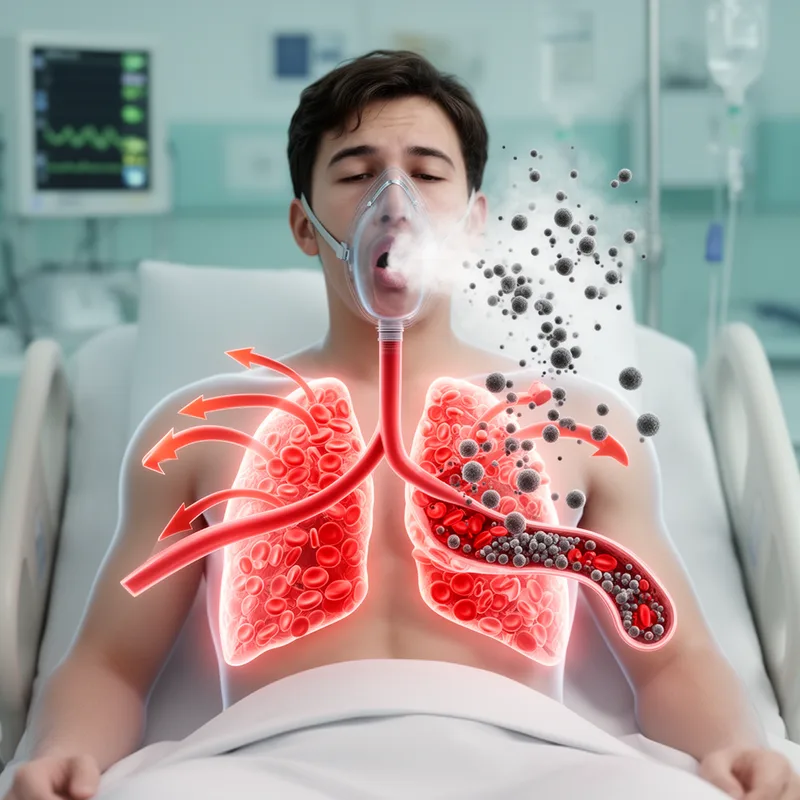
Low carbon dioxide in the blood caused by breathing too fast
Antonyms

How Much CO2
- Specialized
1
9.9

- Specialized
Surface Forms
Morphology
acapnia = capnia (opaque) = a + capnia
Formed by the privative prefix 'a-' + the medical combining form 'capnia'; because 'capnia' is a specialist/combining form unfamiliar to average learners, the meaning is not easily derived.
Etymology
Acapnia comes from Greek parts a- meaning 'without' and capnos meaning 'smoke', and the old image of 'smoke' stands for the gas carbon dioxide in the blood. So acapnia means 'without smoke', which helps you remember it is a condition of having too little carbon dioxide, often after very fast or deep breathing.