
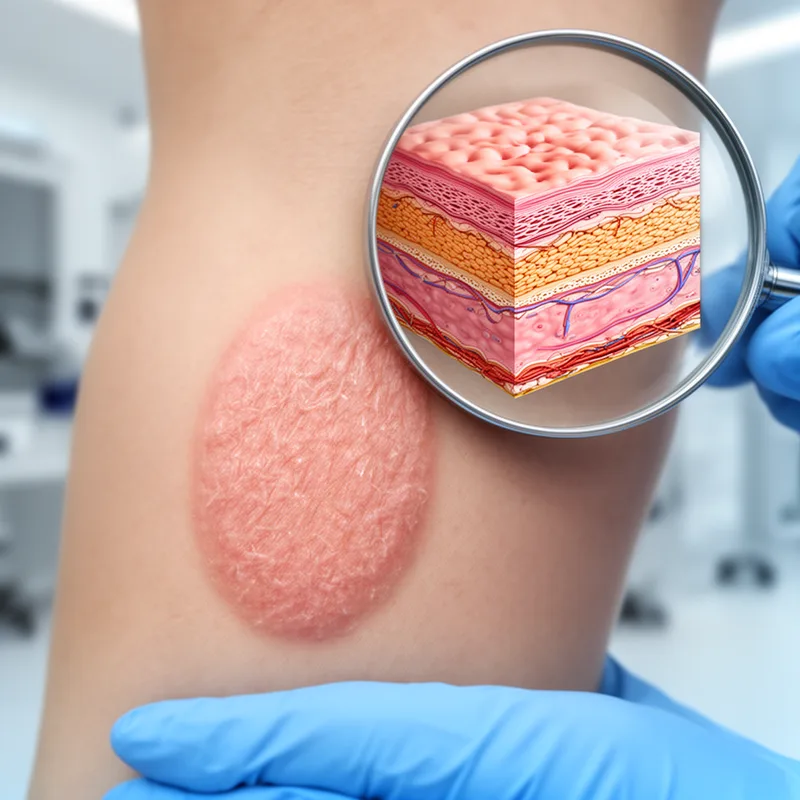
acanthotic
- adjective
- /əˈkænˌθɑtɪk/
- Specialized
- A biopsy revealed acanthotic changes in the epidermis.
Examples
-
The biopsy revealed acanthotic changes consistent with chronic skin inflammation.
-
The presence of acanthotic skin can indicate underlying endocrine disorders.
-
A dermatologist noted acanthotic alterations in the patient's epidermis.
-
The patient was diagnosed with an acanthotic skin condition.
-
A dermatologist noted acanthotic alterations in the patient's epidermis.
-
The biopsy revealed acanthotic changes consistent with chronic skin inflammation.
-
The presence of acanthotic skin can indicate underlying endocrine disorders.
Antonyms


Surface Forms
Morphology
acanthotic = acanthosis (opaque) = acanth + otic
Although the adjectival suffix '-otic' indicates 'relating to', the combining form 'acanth-' (thorn/spine) is obscure to typical learners, so the relation to 'thickening of the skin' is not derivable.
Etymology
Acanthotic comes from the Greek root acanth- meaning 'thorn' or 'spine'. A helpful way to remember it is to imagine the skin layer becoming thicker and a little 'spiky', so acanthotic describes skin that is thicker and looks thorn-like.