
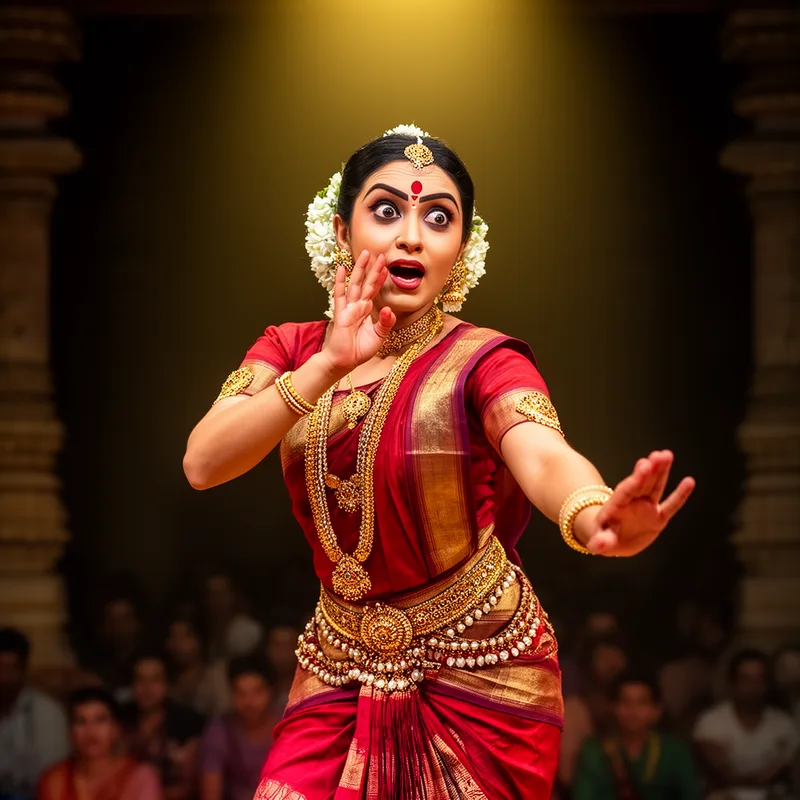
abhinaya
- noun
- /əˈbɪnəjə/
- Indian
- The dancers showcased their abhinaya skills, effectively telling the story without words.
Examples
-
In Indian classical dance, abhinaya is used to convey deep emotions through expressions and gestures.
-
Kudiyattam plays, always based on classical Sanskrit texts, many of them composed in Kerala, invariably include a long nirvahanam or "retrospective" in which a character reveals, mostly by the silent language of hand- and eye-gestures, abhinaya, the long process that has brought him or her to the present moment in the play.
Blog text (12) -
Through abhinaya.
-
Her performance was a stunning display of abhinaya, captivating the audience with her expressive movements.
How Expressive


Surface Forms
Etymology
Abhinaya comes from Sanskrit parts abhi- ('towards') and naya ('leading' or 'showing'). So in Indian dance, abhinaya is like 'acting' or 'expression' — the art of 'bringing feelings forward' with the face, hands, and body.