
Zn
- noun
- /ziːˈnɛd/
- Specialized
- In a previous study of children (5 or 19 years of age) in six California counties, Ostro et al. (2009) reported that EC and Si, but not Zn or K, were associated with respiratory hospitalizations.
Examples
-
Rice plant samples were analyzed to determine the amount of N, P, Na, K, Ca, Mg, Mn, and Zn content both in shoot and root.
Academic text (2014) -
For example, it is known that catalytic reactions require the presence of divalent metal ions such as Mg, Mn, Co, Zn, or Cd.
Academic text (2001) -
For all s is an element of D, and all i is an element of Zn,
Academic text (1997) -
For all s that is an element of N, and all i that is an element of Zn,
Academic text (1997) -
Materials used as sacrifice are mg, zn, and al 2.
Blog text (20) -
All three samples sent for ZN staining showed AFB.
Academic text (2007) -
It follows that f() = f(zn). Moreover, since f'(0) ? 0, it can be expressed as
Academic text (2010) -
In the study area, motor vehicles are a main contributor to Zn and BC, road dust to Si and Al, oil combustion to V and Ni, sea salt to Cl, and regional sources to S (Bell et al. 2010).
Academic text (2014) -
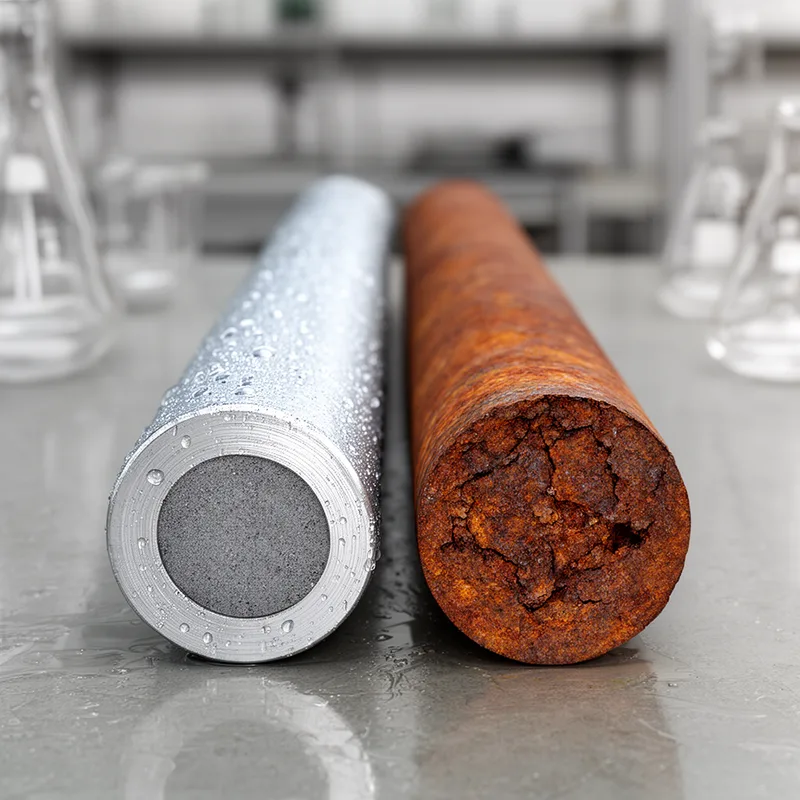
Zinc, represented by the symbol Zn, is often used to galvanize iron to prevent rusting.
-
The metal Zn is crucial in the production of various alloys used in construction.
Surface Forms
Etymology
Zn is the chemical symbol for the metal zinc, a name that came into English from the German Zink, and chemists took the letters 'Z' and 'n' from that name. So Zn is the short form you will see in chemistry for the metal that helps 'protect' iron from 'rust' and is used in alloys and batteries.

