
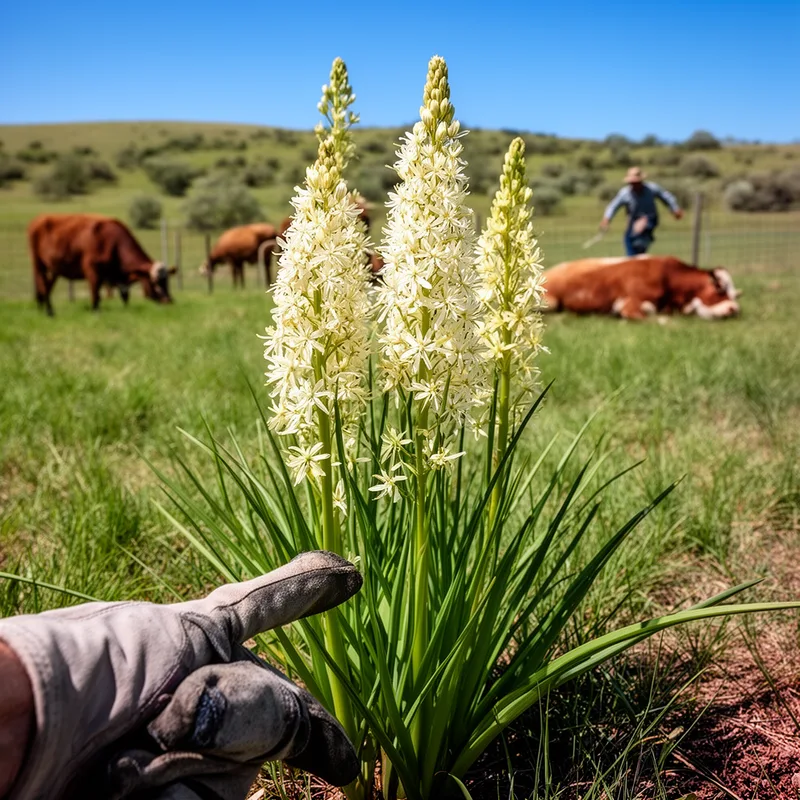
Zigadenus nuttalli
- noun
- Specialized
 :
Zigadenus nuttalli
:
Zigadenus nuttalli
- The bulbs of Zigadenus nuttalli are highly toxic if ingested by humans or animals.
Examples
-
Livestock occasionally die after grazing on Zigadenus nuttalli in pasturelands.
-
Botanists conducted a survey of Zigadenus nuttalli populations in central Texas.
-
The Zigadenus nuttalli is often found in wet meadows.
-
Many animals avoid Zigadenus nuttalli because it is toxic.
-
Livestock occasionally die after grazing on Zigadenus nuttalli in pasturelands.
-
The bulbs of Zigadenus nuttalli are highly toxic if ingested by humans or animals.
-
Many animals avoid Zigadenus nuttalli because it is toxic.
Synonyms
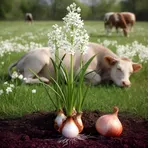
A wild plant whose bulbs look like wild onions and can make animals or people sick
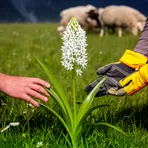
A plant with leaves like grass and small white flowers that is poisonous

A North American plant with grass-like leaves and white poisonous flowers
Surface Forms
Morphology
Zigadenus + nuttalli
This is a Latin binomial: knowing 'Zigadenus' (a genus of mostly poisonous plants) allows a learner to infer that the phrase names a species within that genus, so part of the meaning (a kind of Zigadenus) is derivable. However 'nuttalli' is an uninterpretable species epithet (a proper name with no lexical meaning), so specific senses like 'death camas' or other properties are not predictable from the constituents, yielding only partial transparency.
Etymology
Zigadenus nuttalli is often called 'death camas' because its bulb looks like an edible onion but is deadly. People and animals that ate the bulb sometimes died, so the name warns that the plant is very poisonous.

