
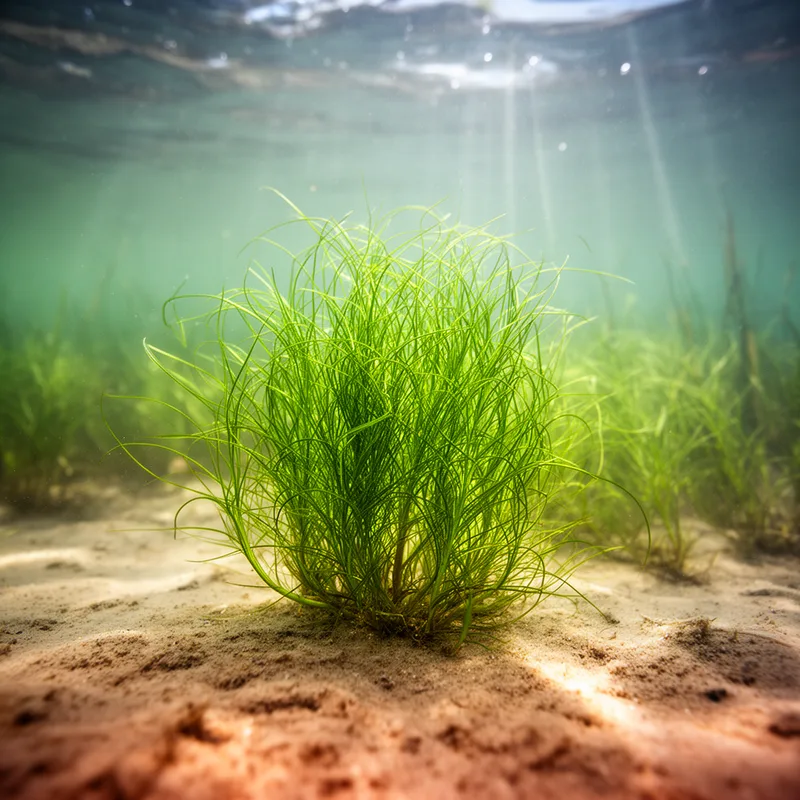
Zannichellia palustris
- noun
- Specialized
 :
Zannichellia palustris
:
Zannichellia palustris
- Zannichellia palustris is often added to aquariums to help increase oxygen levels.
Examples
-
Ecologists found abundant Zannichellia palustris in the marsh's shallow waters.
-
Because Zannichellia palustris thrives in brackish water, it's a common sight in estuarine habitats.
-
The Zannichellia palustris thrives in shallow waters.
-
Aquarists often use Zannichellia palustris to maintain oxygen levels.
-
Zannichellia palustris is a submerged plant that oxygenates waters in aquariums and ponds.
-
The presence of Zannichellia palustris in the lake helps improve water quality by providing oxygen.
-
In many wetlands, Zannichellia palustris is crucial for supporting aquatic life and maintaining ecosystem health.
Synonyms
A water plant with thin leaves that grows in still or slow-moving fresh and slightly salty water
Surface Forms
Morphology
Zannichellia + palustris
This is a scientific Latin binomial combining a specialist genus name and a Latin species epithet ('palustris' is not a standard English word), so its referent (a particular aquatic plant) is taxonomic rather than compositionally built from everyday English vocabulary. A B1 learner who knows common English words would not be able to derive the plant meaning from these constituents (and the epithet's Latin meaning is unlikely to be known), so the expression is not transparently interpretable.
Etymology
Zannichellia palustris is named after the scientist Zannichellia and the Latin word palustris, which means 'of the marsh'. That gives a simple picture of a thin, underwater marsh plant with thread-like leaves. So the name helps you remember it lives underwater in still or slow-moving fresh or 'slightly salty' waters and is often used to add oxygen to ponds.

