
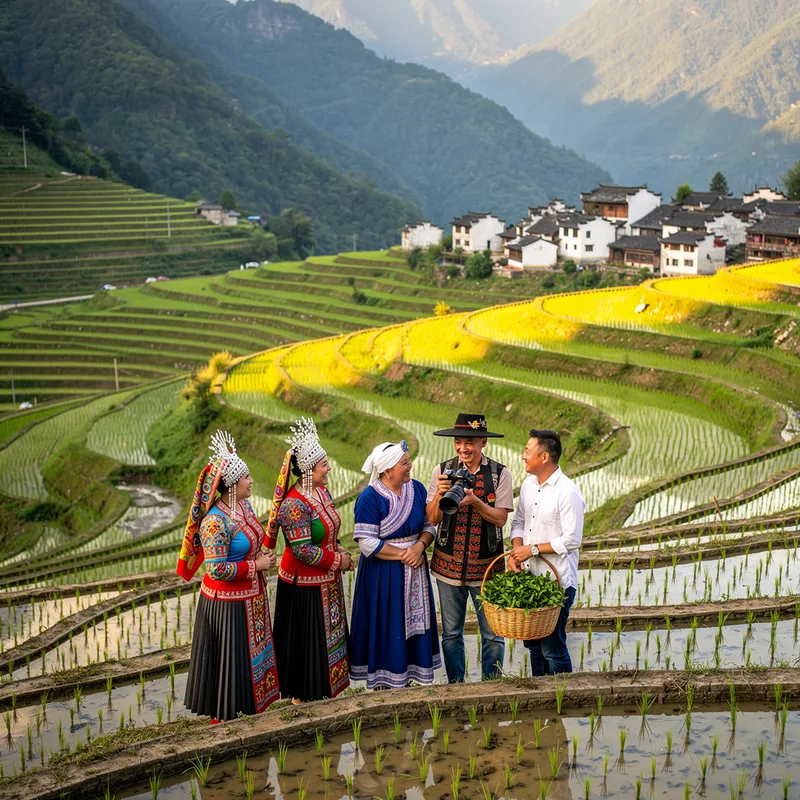
Yunnan
 4
5.9
4
5.9

- proper noun
- The scenic landscapes and vibrant cultures of Yunnan attract many tourists every year.
- Yunnan Province
- Yunnan, China
- Yunnan Provincial
Loading YouTube…
Watch on YouTubeThey range from northern Myanmar, Burma to West Sichuan and Yunnan provinces of China.
- They range from northern Myanmar, Burma to West Sichuan and Yunnan provinces of China.
- I mean, they the Yunnan into the deep interior of China.
- So you have people from very disbarred from Yunnan, from Shanghai, from Guayling coming together and they speak indecipherable languages to each other.
Examples
-
1 Source: Yunnan Provincial Health and Anti-Epidemic Center, Kunming, Yunnan Province, People's Republic of China.
Academic text (1991) -
The continued growth of HIV in Yunnan since 1989 has spurred further investigations.
Academic text (1991) -
But in Yunnan, this thing has started again.
-
Stillwell now had no other choice but to retreat either back to Yunnan or to India.
-
The Bai are the fourteenth largest minority group in China, and the second largest in Yunnan, after the Yi.
Academic text (2008) -
The far-off borderlands, like Yunnan, are considered to be the "hinterlands," the "backwaters" of China.
Academic text (2008) -
French tour books referred to Yunnan as "l'Indochine du Nord" (Guides Madrolle 1939).
Academic text (2008) -
The least-integrated areas are probably the interiors of provinces such as Qinghai, Xizang, Yunnan, and Gansu.
Academic text (1992) -
Dubbed the Golden Hexagon, the project involves Thailand, Vietnam, Laos, Cambodia, Burma, and China's Yunnan Province.
Academic text (1995) -
In 1910, they opened a railway connecting Hanoi with Yunnan's provincial capital of Yunnan-fu (now Kunming).
Academic text (2008)
Synonyms

A province in southern China known for many different cultures, rich plant life, and beautiful scenery
Compounds
A province in southern China known for many different cultures, rich plant life, and beautiful scenery
Surface Forms
Etymology
Yunnan comes from Chinese parts yun 'cloud' and nan 'south'. So the name means 'south of the clouds', a clear image for a province of misty mountains and famous tea.