

Xylaria polymorpha
- noun
- /ˌzaɪˈlɛəriə pəˈlɪmɔrfə/
- Specialized
- The distinctive black clusters of Xylaria polymorpha are sometimes mistaken for decaying fingers emerging from the soil.
Examples
-
Scientists discovered Xylaria polymorpha growing at the base of rotting tree stumps in the old forest.
-
In mycology class, we studied Xylaria polymorpha because of its unusual appearance and ecological role.
-
Xylaria polymorpha is often found in decaying wood.
-
Have you ever seen Xylaria polymorpha in the wild?
-
In mycology class, we studied Xylaria polymorpha because of its unusual appearance and ecological role.
-
Scientists discovered Xylaria polymorpha growing at the base of rotting tree stumps in the old forest.
-
The distinctive black clusters of Xylaria polymorpha resemble decaying fingers emerging from the ground.
Synonyms
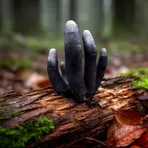
Dark fungi that look like fingers and grow from rotting wood

Dark, finger-shaped parts of a fungus that grow on dead wood
Surface Forms
Morphology
Xylaria + polymorpha
This is a Latin binomial: combining the genus name 'Xylaria' with the species epithet signals that the phrase names a particular species of Xylaria, so a learner who knows the genus would infer it denotes a fungus species. However, the species epithet 'polymorpha' is a technical/Latin form (not given in the learner dictionary) and the specific traits or the common name 'dead man’s fingers' are not directly derivable by an average B1 learner, so comprehension is only partial.
Etymology
Xylaria polymorpha comes from how the fungus looks: its long, black, finger-like bodies grow out of old, rotting wood and look like 'dead man's fingers'. That's why this name refers to that strange-looking fungus and helps people remember it.

