
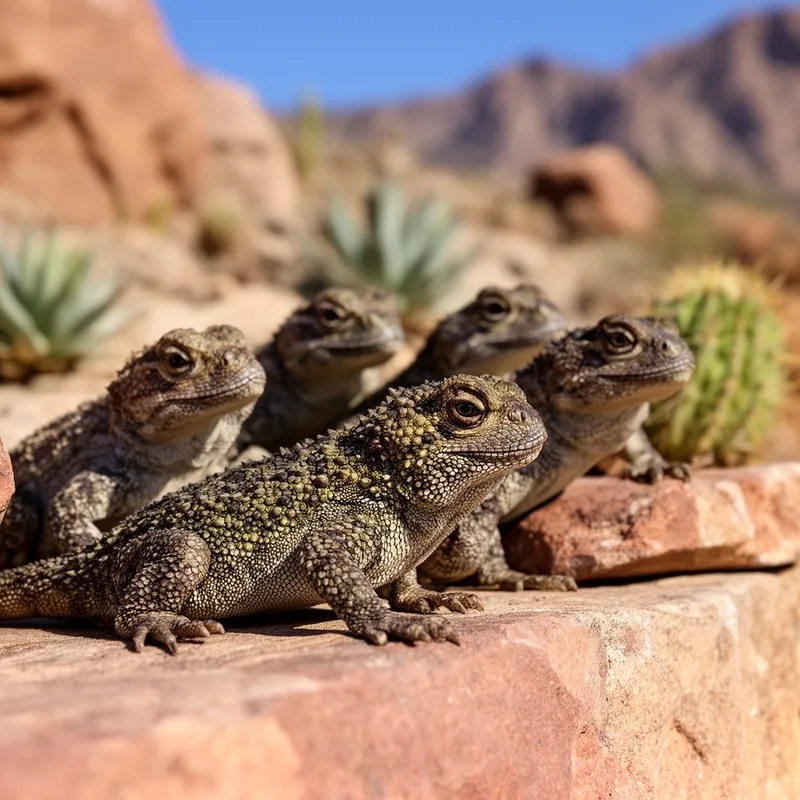
Xenosauridae
- noun
- /ˌzɛnəˈsɔːrɪdeɪ/
- Specialized
- The Xenosauridae are only found in certain rocky regions of Mexico.
Examples
-
Scientists studied the scales of a specimen belonging to the Xenosauridae family.
-
Researchers are fascinated by the distinct appearance and scaly skin of the Xenosauridae lizards.
-
Herpetologists have long debated the evolutionary history of the Xenosauridae.
-
The Xenosauridae family includes unique lizards found in Mexico.
-
Did you know that Xenosauridae lizards have very scaly skin?
-
The Xenosauridae family includes unique lizards that thrive in the rocky habitats of Mexico.
-
In Mexico, the Xenosauridae are known for their adaptation to dry environments and rocky terrains.
Surface Forms
Morphology
Xenosauridae = Xenosaurus (semi-transparent) = xenosaur + idae
Formed from the genus name Xenosaurus plus the technical zoological suffix '-idae', which is regular but specialized vocabulary for learners.
Etymology
Xenosauridae is made of Greek parts that mean 'strange' and 'lizard' plus a common animal family ending. xeno- means 'strange', -saur- is the same part as in dinosaur meaning 'lizard', and -idae marks a 'family', so Xenosauridae literally means a 'family of strange lizards', which fits this unusual group of lizards from Mexico.

