
Xenopus


 1
9.8
1
9.8
- noun
- /ˈzɛnəpəs/
- Specialized
- Application of an ectopic Fgf8 into a Xenopus limb bud mesenchyme causes intercalary regulation 22.
- Xenopus laevis
- African clawed frog Xenopus
Examples
-
Genuine homologues of homeotic genes in Drosophila have been found in many vertebrates (and almost surely exist in all), including the African toad Xenopus, chickens, mice, and humans.
Academic text (1992) -
Xenopus embryos were obtained as previously described 14.
Academic text (2018) -
In both studies, the donor nuclei carried a genetic marker (single nucleolus in Xenopus and pigment pattern in Rana).
Academic text (1999) -
The tension component of the checkpoint, the 3F3 phosphoepitope, was originally detected in studies of antibodies directed against Xenopus egg extracts (Cyert et al. 1988).
Academic text (2009) -
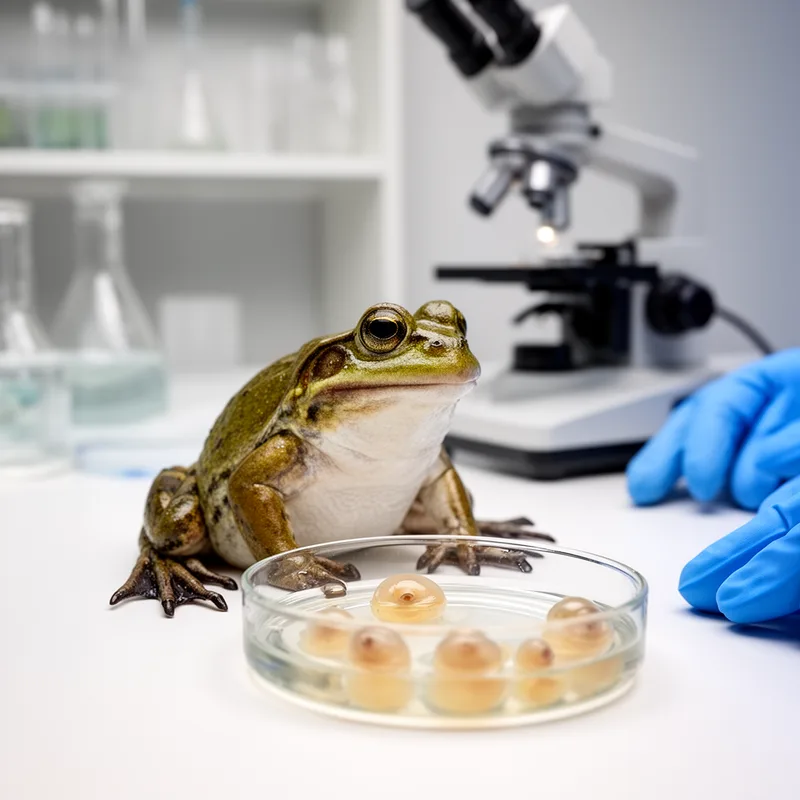
In biological research, scientists often use Xenopus frogs due to their unique developmental stages.
-
The African clawed frog, Xenopus laevis, is commonly used in laboratory experiments.
-
Researchers are studying Xenopus species to understand their genetic adaptations to different environments.
Surface Forms
Etymology
The word Xenopus comes from Greek parts xeno- ('strange' or 'foreign') and pous ('foot'), so it literally means 'strange foot'. These frogs have unusual clawed toes, so the name is an easy picture to remember the African clawed frog that scientists often study.