

Weymouth pine
- noun
- /ˈweɪməθ paɪn/
- US
- The distinctive bark of the Weymouth pine makes it easy to identify in the forest.
Examples
-
The settlers used Weymouth pine to build houses and ships due to its excellent timber quality.
-
A stand of Weymouth pine provides important habitat for many bird species.
-
The Weymouth pine is known for its tall stature.
-
Many Weymouth pines grow in the forests of New England.
-
The tall Weymouth pine stands majestically among the other trees in the forest.
-
Foresters appreciate Weymouth pine for its soft wood, which is ideal for furniture making.
-
The Weymouth pine is easily recognized by its long needles and brown bark with distinctive fissures.
Synonyms


 1
7.7
1
7.7
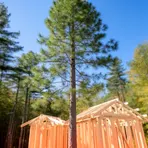
A tall pine tree from eastern North America with soft needles and light wood used for building
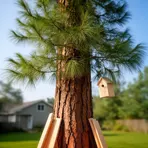
A tall tree from eastern North America with long needles, soft wood, and brown bark with long cracks

A tall pine tree that grows in eastern North America and gives wood used for building
Surface Forms
Morphology
Weymouth + pine
This is a straightforward modifier + noun compound: 'pine' clearly denotes a type of tree and 'Weymouth' functions as a proper-name/place modifier, so the meaning 'a kind of pine associated with Weymouth' is compositionally derivable. A B1 learner who knows the constituents would therefore understand it refers to a specific type/variety of pine even if they do not know the botanical details.
Etymology
Weymouth pine may come from an English sea captain, George Weymouth, who brought seeds and young trees from eastern North America to England in the early 1600s. Because people linked the tree to his name, the name Weymouth pine came to mean this tall eastern white pine today.