
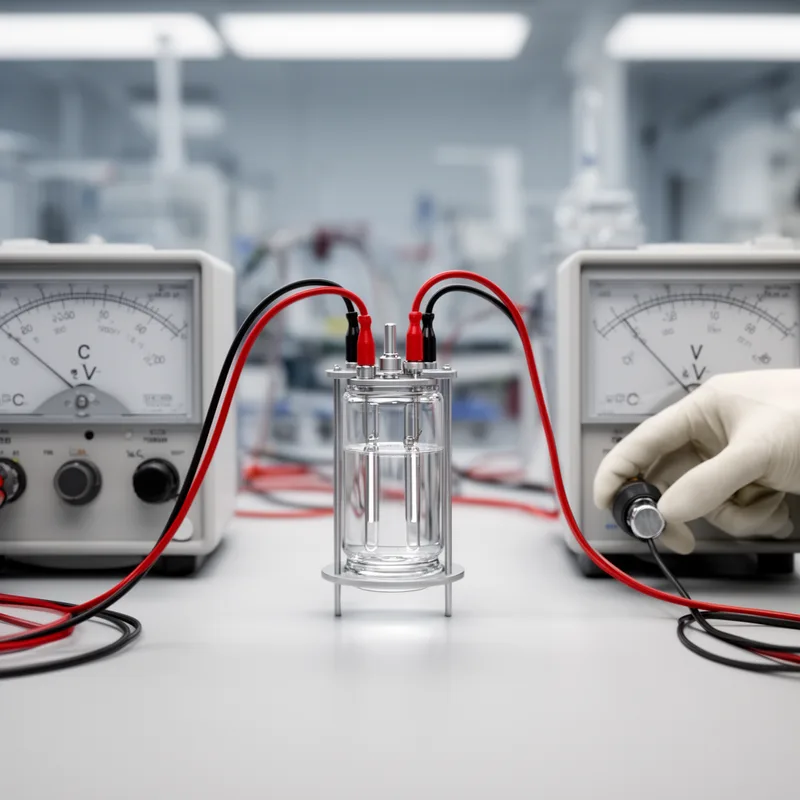
Weston cell
- noun
- /ˈwɛstən sɛl/
- Archaic
- The laboratory uses a Weston cell to calibrate its voltmeters.
Examples
-
A Weston cell provides a very stable voltage under constant conditions.
-
Edward Weston invented the Weston cell in the late 19th century.
-
The Weston cell is essential for accurate voltage measurements.
-
Researchers often use a Weston cell in their experiments.
-
The laboratory uses a Weston cell to calibrate its voltmeters.
-
A Weston cell provides a very stable voltage under constant conditions.
-
The Weston cell is essential for accurate voltage measurements.
Synonyms

A very stable battery used to check voltage on measuring devices
Surface Forms
Morphology
Weston + cell
The headword combines a proper name (Weston) with the noun 'cell', so a B1 learner who knows 'cell' can infer this is a specific kind of electrical cell named after a person, but they cannot derive the specialized function (a precision reference standard for electromotive force) from the constituents. Because the basic category is transparent but the technical, conventional meaning requires subject-matter or cultural knowledge, this is only partially transparent to learners.
Etymology
Weston cell is named after Edward Weston and refers to a small, very steady cell, or battery, that gives a constant electric 'push'. Scientists used the cell like a 'measuring stick' to check voltmeters, so the name now means a standard source of 'voltage' for careful measurements.

