
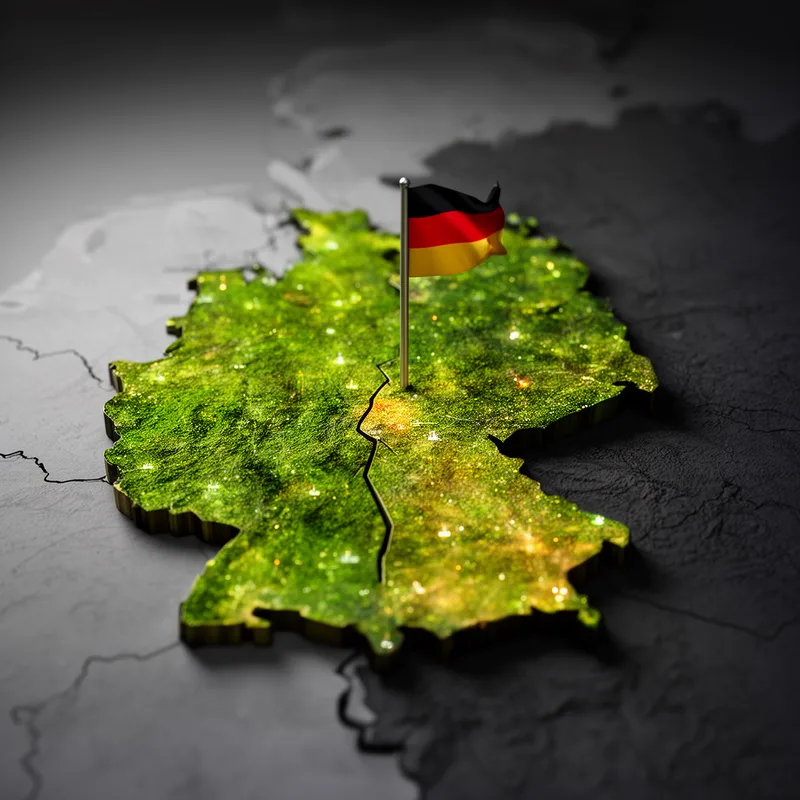
West Germany
 24
3.7
24
3.7

- proper noun
- Never before had the third channel in West Germany gotten more viewers than the other two combined.
- East and West Germany
- France and West Germany
- Britain and West Germany
Loading YouTube…
Watch on YouTubeAnd in contrast, in West Germany, you could go to the next car dealership and take it away the same afternoon.
- And in contrast, in West Germany, you could go to the next car dealership and take it away the same afternoon.
- I met a classmate of mine from high school and he confided to me that he was recruited by the Stasi to become a spy go as a spy to West Germany.
Examples
-
Denmark also supplied over 14,000 tons of trout to West Germany in 1987.
Academic text (1990) -
Monetary policy in Japan and West Germany was shifted to a stance that allowed an increase in market interest rates.
Academic text (1990) -
There they were welcomed and provided with transportation to West Germany.
Academic text (1999) -
American occupation policies in West Germany and Japan made a major contribution to the global spread of democracy.
Academic text (1990) -
And in contrast, in West Germany, you could go to the next car dealership and take it away the same afternoon.
-
In the 1950s, West Germany honored him for his actions on behalf of the ship's passengers.
Academic text (2017) -
NATO had twelve members in 1949, and by 1954, there were fifteen members, including West Germany.
Academic text (1990) -
In 1973, West Germany's first military universities opened in Hamburg and Munich.
Academic text (1990) -
Imports now account for almost 80 percent (by quantity) of edible fishery products consumed in West Germany.
Academic text (1990) -
In the years leading up to reunification, West Germany was known for its strong economy and democratic government.
Synonyms

A country in central Europe formed after World War II that became one country again in 1990
Surface Forms
Morphology
The compound 'West Germany' is directly built from 'West' (western part) + 'Germany' (the country), so a B1 learner who knows both words will understand it refers to the western part or polity of Germany. While the precise historical/political details (dates, postwar statehood, reunification) require background knowledge, the basic geographic/political sense is compositional and cross-linguistically recognizable.
Etymology
West Germany got its name because, after World War II, the western part of Germany was run by the United States, Britain and France, so people called it the West part. That's why West Germany refers to the 'separate country' that existed from 1949 until it joined again with East Germany in 1990.