
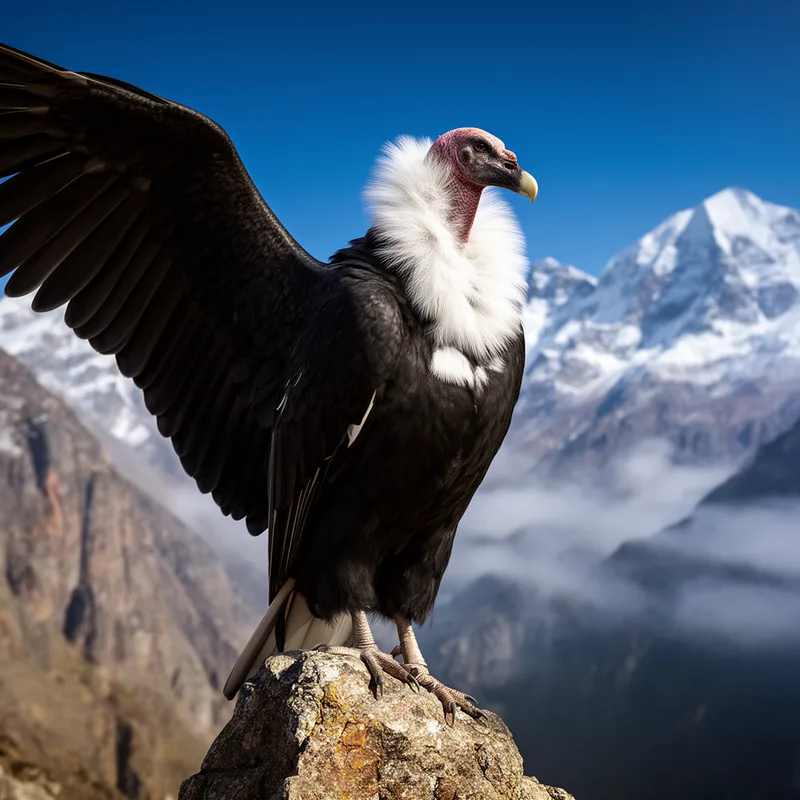
Vultur gryphus
- noun
- Specialized
- The Vultur gryphus soars majestically over the Andean mountains, searching for carrion.
Examples
-
The white neck ruff is a distinguishing feature of the Vultur gryphus.
-
Conservation efforts have been implemented to protect the endangered Vultur gryphus population.
-
The majestic Vultur gryphus soars high above the Andes.
-
Did you know that the Vultur gryphus is the national bird of Colombia?
-
The Vultur gryphus, known for its impressive wingspan, is commonly seen gliding in the thermals of the Andes.
-
Many tourists flock to see the Vultur gryphus in its natural habitat, appreciating its beauty and enormous size.
-
The Vultur gryphus feeds primarily on carrion, playing a crucial role in the ecosystem by cleaning the environment.
Synonyms

 18
5.6
18
5.6

A very large vulture with a bare head that lives in parts of the Americas

A very large vulture with black feathers and a white neck ruff that lives in the high Andes
Surface Forms
Morphology
Vultur + gryphus
The genus element 'Vultur' signals a vulture and would allow a learner who recognises that component to infer that the phrase names a kind of vulture. However the species epithet 'gryphus' is not a common English word (and is not defined here), and the precise referent (the Andean condor) is specialized knowledge not predictable from the constituents alone, so the full meaning is not immediately derivable.
Etymology
Vultur gryphus comes from old Latin and Greek words: Vultur means 'vulture' and gryphus may come from a word for a 'griffin' — a mythical bird with a hooked beak — so the name creates the picture of a large bird with a strong hooked beak and a white neck ruff. That's why the name fits the big Andean vulture we call the Andean condor.