
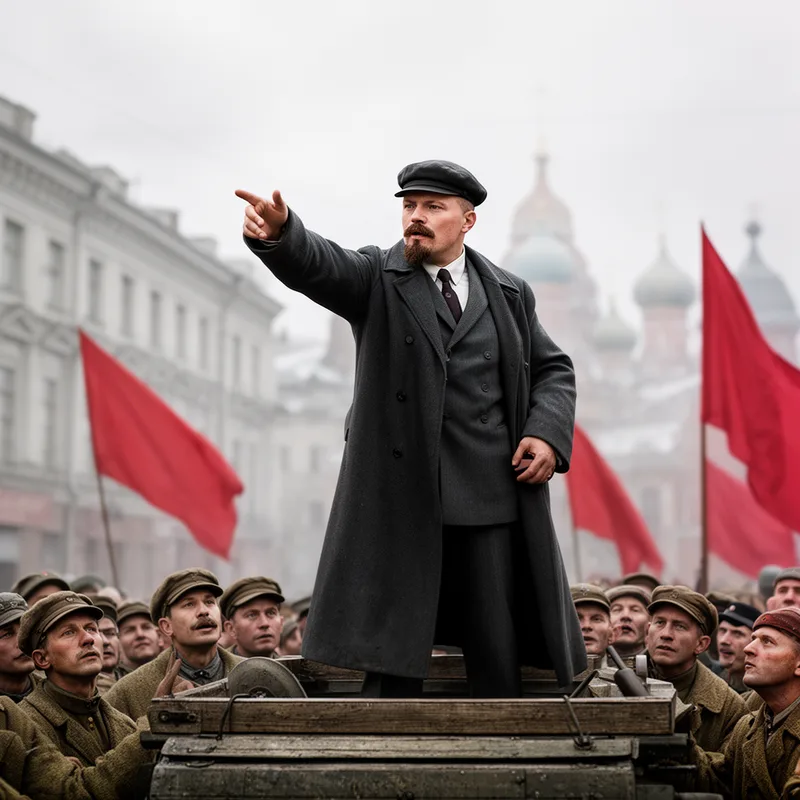
Vladimir Lenin
- proper noun
- Vladimir Lenin played a pivotal role in shaping 20th-century Russian history as the leader of the Bolshevik Revolution.
Examples
-
A statue of Vladimir Lenin still stands in some cities of the former Soviet Union.
-
Vladimir Lenin is remembered as the founder of the Bolshevik Party and a key figure in the Russian Revolution.
-
Many scholars have studied the influence of Vladimir Lenin on modern communist states.
-
Vladimir Lenin was a revolutionary leader.
-
What did Vladimir Lenin achieve?
-
The ideas of Vladimir Lenin laid the groundwork for the establishment of the Soviet Union.
-
In many history classes, Vladimir Lenin's strategies during the revolution are critically analyzed.
Synonyms
 85
4.1
85
4.1

Russian political leader who led the 1917 revolution and became the first leader of the Soviet Union
A Russian revolutionary who led the 1917 Bolshevik Revolution and became the first leader of the Soviet Union

A Russian revolutionary leader who founded the Bolshevik Party and led the 1917 revolution
A Russian revolutionary leader who led the Bolshevik party and helped start the Soviet Union
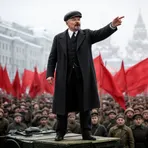
Russian revolutionary leader who led the 1917 revolution and became the first head of the Soviet Union

A Russian political leader who led the 1917 revolution and founded the Soviet state
Surface Forms
Morphology
Vladimir + Lenin
This is a proper personal name rather than a compositional phrase, so its referent (a Russian revolutionary leader and historical figure) cannot be derived from the constituent name-parts. Even if a learner knows the individual names 'Vladimir' and 'Lenin' as words, the biographical meaning is arbitrary and must be learned separately, making it non-compositional across languages.
Etymology
Vladimir Lenin took the name Lenin as a 'pen name' when he joined the revolution. One popular story says he chose Lenin from the Lena River in Siberia to hide his real name and to sound like a strong leader, so history knows him as Vladimir Lenin today.