
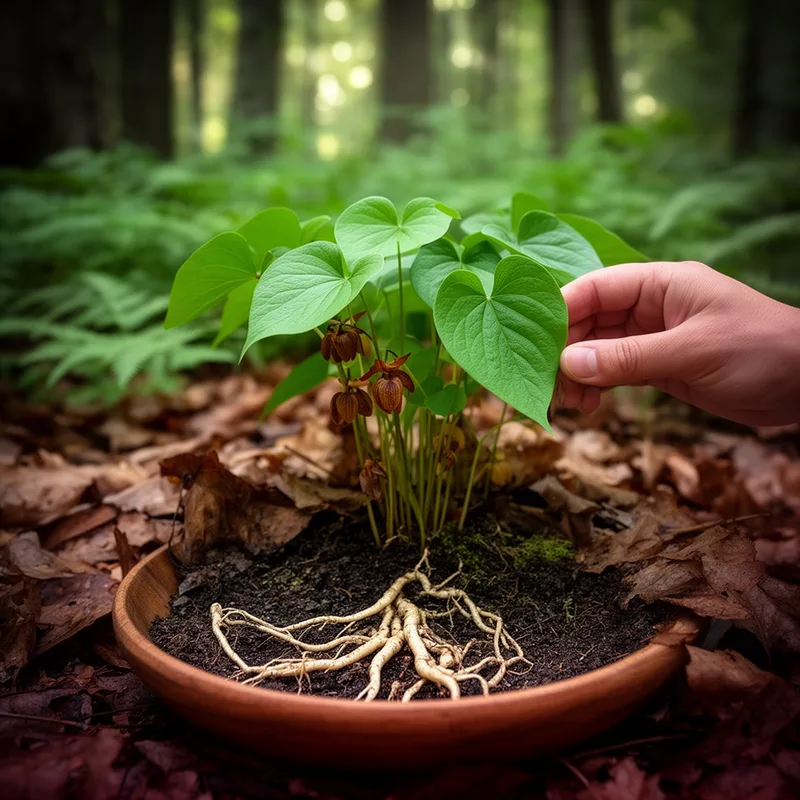
Virginia snakeroot
- noun
- /vərˈdʒɪnɪə ˈsneɪkˌruːt/
- US
- The botanist discovered a cluster of Virginia snakeroot in the woodland understory.
Examples
-
Herbalists once used Virginia snakeroot as an ingredient in traditional remedies.
-
Early settlers believed that Virginia snakeroot had medicinal properties to treat snakebites.
-
The Virginia snakeroot is known for its medicinal properties.
-
Many herbalists recommend Virginia snakeroot for digestive issues.
-
Early settlers believed that Virginia snakeroot could be used to treat snakebites with its medicinal properties.
-
Herbalists historically incorporated Virginia snakeroot into various traditional remedies because of its healing benefits.
-
The botanist studied Virginia snakeroot for its heart-shaped leaves and brownish flowers found in the woodland.
Synonyms
A woodland plant with slender stems and heart-shaped leaves called Virginia snakeroot

A plant that grows in eastern United States woods with thin, curved roots once used in herbal medicine
A woodland plant with pipe-shaped flowers that grows in the eastern United States
Surface Forms
Morphology
Virginia + snakeroot
The noun is a straightforward place-name + plant-name compound: 'Virginia' signals geographic origin and 'snakeroot' transparently combines 'snake' + 'root', indicating a plant root associated with snakes or named for snakes. A B1 learner who knows the constituents would readily infer this refers to a plant/herb from Virginia, since place + noun naming patterns are common and compositional.
Etymology
Virginia snakeroot was named because early settlers and herbalists used its root to 'treat snake bites', believing the plant could help after a bite. So the name points to a woodland herb once used as a medicine.

