

Virgin Birth


 1
7.5
1
7.5
- noun
- /ˈvɜrdʒɪn bɜrθ/
- Specialized
- In Christian theology, the Virgin Birth represents a miracle that signifies Jesus' divine nature.
Examples
-
The Virgin Birth of Jesus:
Blog text (26) -
Eighty-three percent of Americans say they believe in the Virgin Birth of Jesus.
Academic text (2006) -
I don't know why you are so hung up on miracles, such as the Virgin Birth or the Resurrection of Jesus, that have little, if anything, to do with science.
Blog text (27) -
Matt wrote to me: I don't know why you are so hung up on miracles, such as the Virgin Birth or the Resurrection of Jesus, that have little if anything to do with science.
Blog text (27) -
Too many modern theologians claim to believe in the Resurrection and Virgin Birth but neglect to tell their readers that they are not using those terms in the same sense as the average fellow sitting in the pew on Sunday mornings.
Blog text (27) -
Many Christians believe in the Virgin Birth of Jesus, affirming that he was born to Mary without a human father.
-
The doctrine of the Virgin Birth asserts that Jesus was conceived by the Holy Spirit and born of the Virgin Mary.
Synonyms
 22
7.4
22
7.4
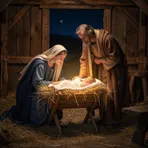
The birth of Jesus Christ often shown in a scene at Christmas
Surface Forms
Morphology
The meaning 'a birth involving a virgin' or 'a birth without sexual intercourse' is directly and compositionally derivable from combining 'virgin' (someone who has not had sex) with 'birth' (coming-into-existence). This straightforward noun + noun composition is cross-linguistically common, so a B1 learner who knows both words will readily infer the intended sense (even if they may not know the technical term 'parthenogenesis' or the specific religious connotations).
Etymology
Virgin Birth comes from the Christian story of Mary, who was said to be a virgin yet gave birth to Jesus with no human father. That's why the phrase means 'a miraculous birth without a human father'.