

Viola arvensis
- noun
- Specialized
- The Viola arvensis blooms in early spring along the edges of cultivated fields.
Examples
-
Botanists collected specimens of Viola arvensis for their research on native European wildflowers.
-
Gardeners often confuse Viola arvensis with other species of wild pansies.
-
Look at that lovely Viola arvensis!
-
The Viola arvensis blooms beautifully in the spring.
-
The Viola arvensis flowers create a beautiful display in the meadow during spring.
-
Farmers often appreciate Viola arvensis for its vibrant appearance in fields.
-
You can find Viola arvensis growing wild in many grasslands across Europe.
Synonyms
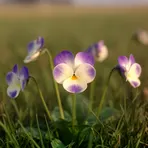
A small wild flower with pale cream petals often touched with violet in fields
Surface Forms
Morphology
Viola + arvensis
The compound is compositionally the genus name Viola plus the Latin epithet arvensis (literally 'of the field'), so the sense 'a field/wild pansy species of Viola' is derivable if a learner recognises Latin epithets and binomial naming. However, 'arvensis' is a technical Latin element not found in everyday English and taxonomic conventions are specialized, so a typical B1 learner who knows only ordinary English words would not reliably infer the exact meaning.
Etymology
Viola arvensis comes from Latin: Viola means the violet or wild pansy and arvensis means 'of the field'. This simple picture — a violet-like flower growing in fields — explains why the name is used for the wild pansy found in European fields.

