
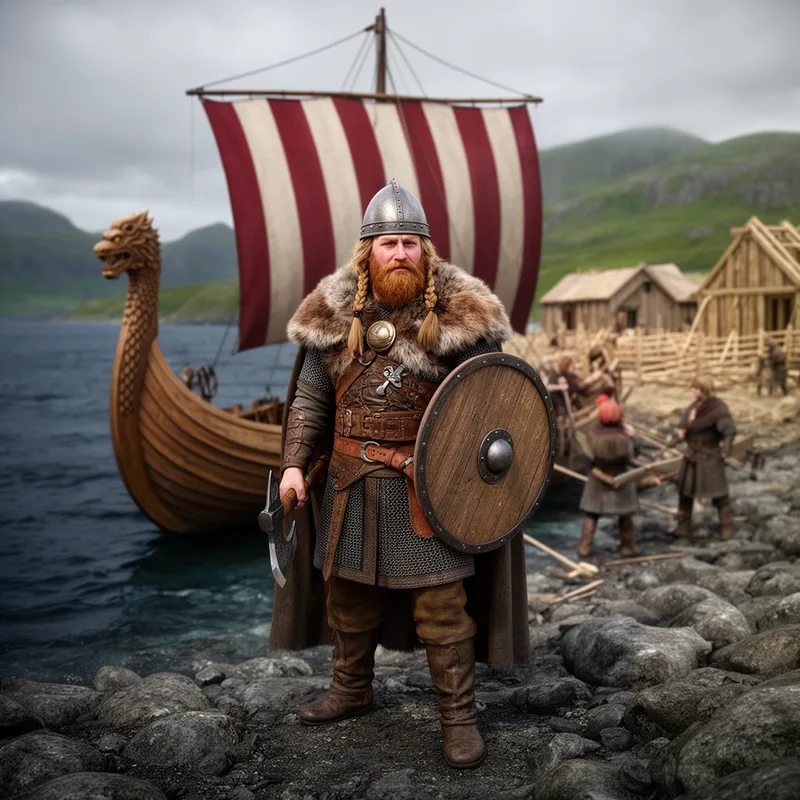
Viking


 1
4.0
1
4.0
- noun
- /ˈvaɪkɪŋ/
- During the 8th century, the Vikings settled in parts of England, influencing local culture.
Loading YouTube…
Watch on YouTubeMaybe the Normans will invade or the Vikings or the Scots or whoever.
- Maybe the Normans will invade or the Vikings or the Scots or whoever.
- Same thing with the Romans, same thing with the Vikings or the Spartans.
- Indeed, the city of Dublin was founded by the Vikings.
- They provoke the people who we remember as the Vikings.
- Sky in the Deep was inspired by Vikings.
- Do not get the sense that the Vikings set up a job fair tent in Ireland.
Examples
-
Originally built, local legend has it, as a defense against the viking raiders.
-
The Vikings were known for their longships and daring raids along the coasts of Europe.
-
Alfred was convinced that this time, the Vikings would keep their word.
-
A new season is budding, and for the Vikings, it starts today.
-
Same thing with the Romans, same thing with the Vikings or the Spartans.
-
This is not about our viking quests or extending our realm.
-
They were called the Vikings and and they occupied other lands.
-
Maybe the Normans will invade or the Vikings or the Scots or whoever.
-
There are many stories, of course, about men at sea—vikings, whalers, pirates.
Fiction book (1993) -
Many tales in history recount how the Vikings navigated through rough seas to reach distant lands.
Synonyms
 3
9.9
3
9.9
A man from northern Europe who lived during the Viking Age
 1
8.8
1
8.8
A man from Norway in the Viking age
A person from Norway or nearby countries in ancient times, often a Viking
Compounds


Traditions, history, and way of life of the Viking people, like their stories and tools
Surface Forms
Etymology
Viking came from an old Scandinavian word víkingr, which meant 'raider' or 'sea warrior'. One helpful idea links víkingr to vik, meaning 'bay', so a Viking would be a person from the bays who used boats to raid and travel, which is why Viking today means the seafaring raiders and settlers of northern Europe.