
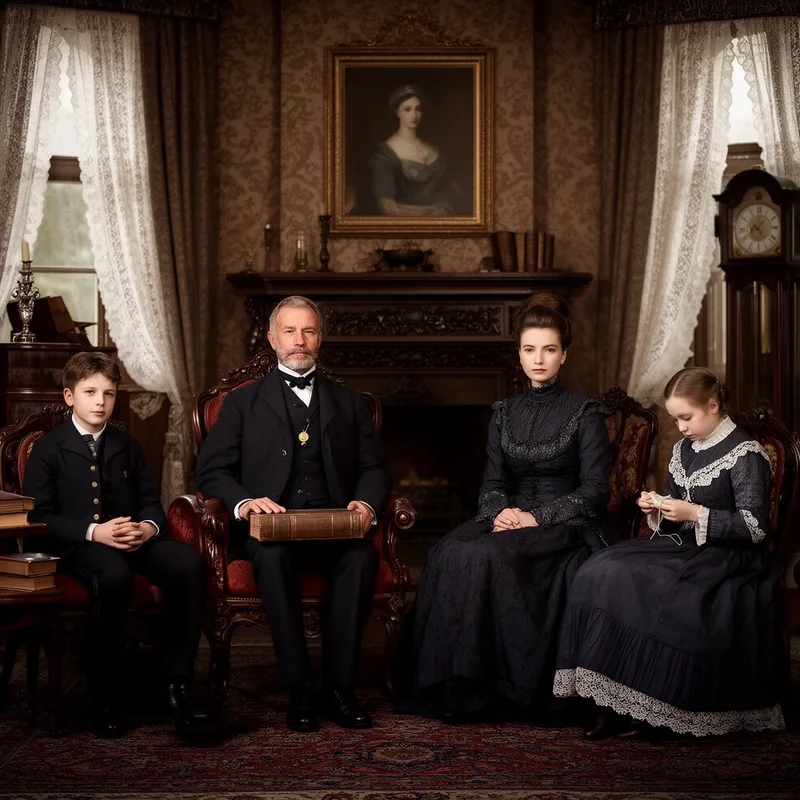
Victorianism


 1
8.9
- noun
- /vɪkˈtɔriənɪzəm/
- The strict social codes of Victorianism often dictated the behavior of individuals during the 19th century.
Examples
-
Cohen is undoubtedly right to identify the fundamental legacy of Victorianism in Hitchcock's work as the separation of gender spheres.
Academic text (1999) -
The decline of Victorianism had multiple causes: developments within capitalism, growing diversity and pluralism, and the world war.
Academic text (1994) -
So that the sense that tradition is something you repair to take something from, carry it safely out of Victorianism into modernity.
-
Revolt against Victorianism.
Academic text (1997) -
It exhibits the worst excesses of Victorianism and none of the charm.
Fiction book (1992) -
Franco Felluga. Extension of Romanticism and Victorianism on the Net. Web. 28 Feb. 2014.
Academic text (2016) -
Aldridge, D. P. (2007). Of Victorianism, civilizationism, and progressivism
Academic text (2018) -
To put it more briefly, it seems like the message we've "learned" from feminism is "Men Are Bad," layered above Victorianism's "Men Are Gross."
Blog text (19) -
Many of the paintings from that era reflect the style and values of Victorianism adorning the walls of the gallery.
-
Literature of the time frequently showcased the moral dilemmas associated with Victorianism, challenging its rigid standards.
Antonyms
 65
5.8
A political belief that values individual freedom, equal rights, limited government, free markets, and social progress
Surface Forms
Morphology
Etymology
Victorianism comes from the name Victoria, the British queen who ruled in the 1800s, plus the ending -ism, which means 'belief', 'style', or 'movement'. So Victorianism means the ideas, strict social rules, and particular styles of Queen Victoria's time, which is why it points to those moral attitudes and the look of clothes and houses.