

Vespula vulgaris
- noun
- Specialized
- Vespula vulgaris is easily recognized by its distinct yellow and black stripes.
Examples
-
The nest in our attic turned out to belong to Vespula vulgaris.
-
Researchers observed the behavior of Vespula vulgaris colonies during late summer.
-
Vespula vulgaris is often mistaken for other yellow jacket species due to its similar appearance.
-
The Vespula vulgaris is often mistaken for other wasp species.
-
Many people are allergic to the sting of Vespula vulgaris.
-
Many beekeepers are concerned about the presence of Vespula vulgaris near their hives.
-
When disturbed, Vespula vulgaris can become aggressive and defend their nest.
Synonyms
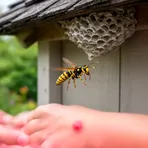
A small flying insect with black and yellow stripes that makes nests near houses and can sting
Surface Forms
Morphology
This is a Linnaean binomial composed of the genus name Vespula and the Latin epithet vulgaris, which means 'common' or 'widespread'; a learner who knows both constituents can infer it refers to a common species of Vespula (wasp). Scientific naming is compositional and follows a cross-linguistic convention, so the overall meaning is directly derivable from the parts.
Etymology
Vespula vulgaris is a Latin name: vespula means 'little wasp' and vulgaris means 'common'. So the name simply says this is the 'common' little wasp, which is why it refers to the usual yellow-and-black wasp people see.

