
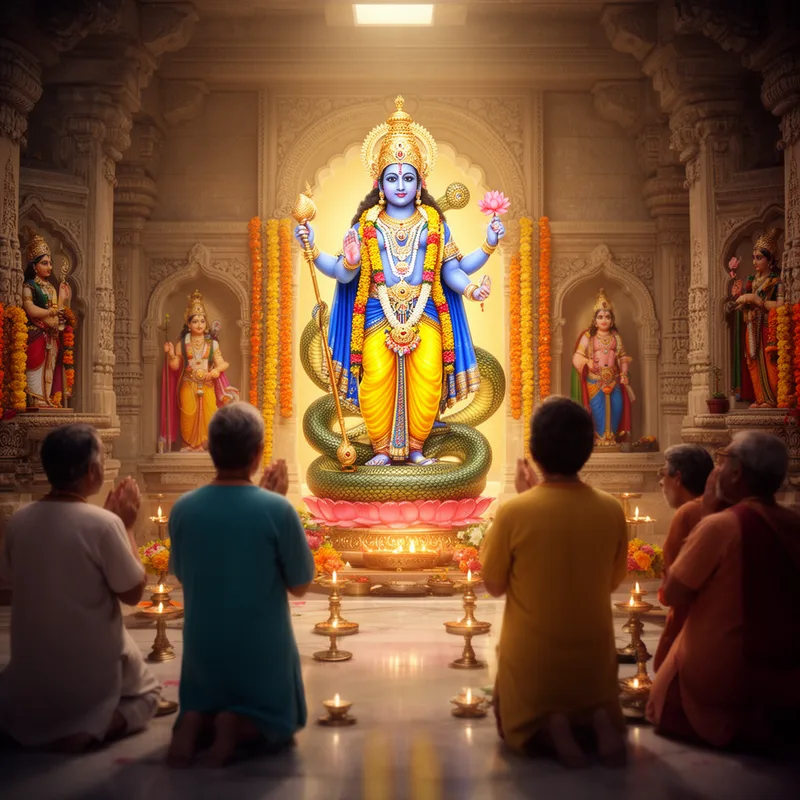
Vaisnavism
- noun
- /ˈvaɪs.nəˌvɪ.zəm/
- Indian
- He studied Vaisnavism to better understand the role of Vishnu in Hindu beliefs.
Examples
-
Many festivals associated with Vaisnavism are celebrated with great devotion in India.
-
He studied Vaisnavism to better understand the role of Vishnu as the supreme deity in Hindu beliefs.
-
The temple was built as a center of Vaisnavism in the region.
-
Many people practice Vaisnavism in India.
-
Is Vaisnavism the same as Vaishnavism?
-
The festival of Janmashtami is a major celebration among followers of Vaisnavism in India.
-
The newly constructed temple serves as a vibrant center for Vaisnavism and its rituals.
Synonyms



 1
9.9
A tradition of Hinduism where people worship Vishnu as the main god

A Hindu religious tradition that worships Vishnu as the main god
Surface Forms
Morphology
Etymology
Vaisnavism comes from the name of the Hindu god Vishnu and the ending -ism, which means 'belief' or 'system'. So Vaisnavism means the religious tradition that worships Vishnu as the main god.