

Vaccinium myrsinites
- noun
- Specialized
- Vaccinium myrsinites grows abundantly in pine forests throughout Florida and the southeastern United States.
Examples
-
The bluish-black berries of Vaccinium myrsinites are popular with many bird species in the region.
-
Botanists studied the evergreen leaves of Vaccinium myrsinites to better understand its ecological role.
-
The Vaccinium myrsinites is often found in sandy soils.
-
Have you ever seen a Vaccinium myrsinites in the wild?
-
Vaccinium myrsinites produces small bluish-black berries that are a favorite among birds in southeastern forests.
-
The shiny evergreen leaves of Vaccinium myrsinites help it thrive in Florida's warm climate.
-
You can easily identify Vaccinium myrsinites by its distinctive dark berries and glossy leaves.
Synonyms

 10
1.0
10
1.0

A plant that makes small blue berries you can eat
 1
1.0
1
1.0
A small bush that grows blueberries
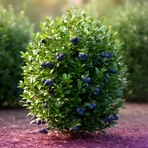
A bush with shiny leaves that stay green all year and dark blue berries
Surface Forms
Morphology
Vaccinium + myrsinites
This is a scientific Latin binomial: the genus name 'Vaccinium' may signal a group of shrubs but the species epithet 'myrsinites' is not an ordinary English word and does not transparently convey the descriptive meaning given. A B1 learner who knows the parts still could not reliably infer the precise shrub description from the constituents or derive the idiomatic taxonomic usage, so the expression is not compositionally predictable.
Etymology
Vaccinium myrsinites may come from two old words: Vaccinium (a group of berry plants) and myrsinites meaning 'like myrtle', which gives the image of a myrtle-like shrub with berries. So the name fits the plant today, a shiny evergreen shrub with bluish-black berries.