

Ursus arctos horribilis
- noun
- /ˈɜr.səs ˈɑrk.tos hɔˈrɪb.ɪ.lɪs/
- Specialized
- The Ursus arctos horribilis is more commonly known as the grizzly bear in North America.
Examples
-
Encounters with Ursus arctos horribilis are rare but potentially dangerous for hikers in Montana.
-
Biologists studied the habitat of Ursus arctos horribilis to better understand its behavior.
-
The Ursus arctos horribilis is known for its strength and size.
-
Have you ever seen a Ursus arctos horribilis in the wild?
-
Biologists studied the habitat of Ursus arctos horribilis to better understand its behavior.
-
Encounters with Ursus arctos horribilis are rare but potentially dangerous for hikers in Montana.
-
The Ursus arctos horribilis is more commonly known as the grizzly bear in North America.
Synonyms
 57
3.9
57
3.9

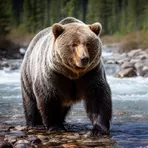
A large brownish-gray bear in western North America with a hump on its shoulder
 22
3.1
22
3.1
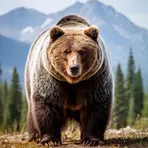
A large, powerful brown bear that lives in mountains and forests in western North America

A large strong brown bear that lives in western North America called a grizzly bear

A large brown bear with light fur on its head in the mountains of western North America

A large brown bear with silver-tipped fur found in western North America
Surface Forms
Morphology
Ursus + arctos + horribilis
This is a Latin binomial (genus + species + subspecies) rather than an ordinary English phrase, so a B1 learner who only knows the literal constituent meanings would at best infer something like 'bear' or 'horrible bear' but not the specific taxonomic referent 'grizzly bear'. The elements are morphology from Latin/Greek and the name functions as a technical label, giving partial clues but not a predictable everyday meaning for typical learners.
Etymology
Ursus arctos horribilis comes from old Latin and Greek words: Ursus means 'bear', arctos also means 'bear', and horribilis means 'terrible'. Early scientists used this name because the grizzly looked large and fierce, so the name literally means a 'terrible bear' and points to the animal's size and power.