
Umbria
 4
6.1

- proper noun
- /ˈʌmbrɪə/
- The first time we went to Rome for a few days, then to Roccaraso, a skiing resort in Abruzzo, and visited Umbria for a few days.
- Umbria and Tuscany
- Umbria, Italy
- Umbria and Marche
Loading YouTube…
Watch on YouTubeFall mornings and Umbria are veiled with dew.
- Fall mornings and Umbria are veiled with dew.
Examples
-
We found a tiny apartment tucked away behind the cathedral in the center of Perugia, a town in Umbria Henry James once called "the little city of infinite views."
Academic text (2007) -
So it was this past Monday that we left Bologna and headed for our next destination, Perugia, the capital of Umbria.
Blog text (3) -
I'll be teaching for six days in Umbria next summer, and spots are limited.
Blog text (19) -
The Italian town of Assisi is in Umbria.
Blog text (7) -
Assisi, in Umbria, is the birthplace of St. Francis and one of the stops we will make on this tour.
Blog text (4) -
Fall mornings and Umbria are veiled with dew.
-
The second vacation during Christmastime in Italy was in several cities, towns, and villages of Tuscany, Umbria (again), and the Amalfi Coast.
Blog text (24) -
Last Christmastime, we visited the region of Trento, the city of Trento itself, Umbria, and Rimini in Emilia Romagna.
Blog text (24) -
Beginning in the 1880s, pellagra began to decline in the plains of these regions, but not in the hills or in mountainous central regions such as Tuscany, The Marches, and Umbria.
Academic text (1992) -
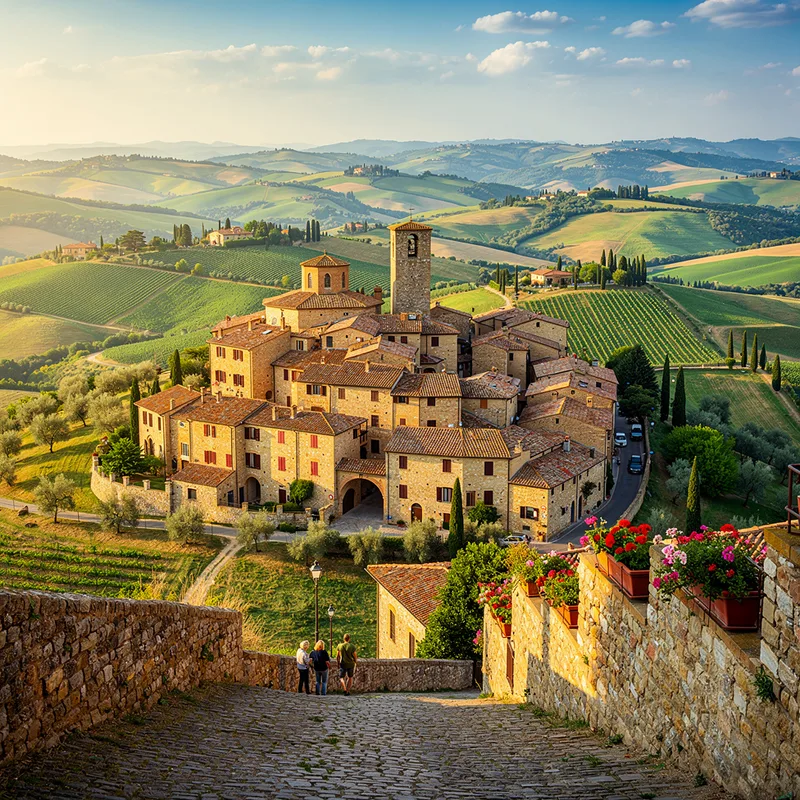
Umbria is famous for its picturesque landscapes and historic towns.
Surface Forms
Etymology
Umbria comes from the name of the ancient people who lived there, the Umbri. One idea is that their name is linked to the Latin umbra 'shade', which is easy to remember because Umbria is known for its green, hilly land and shaded woods.