
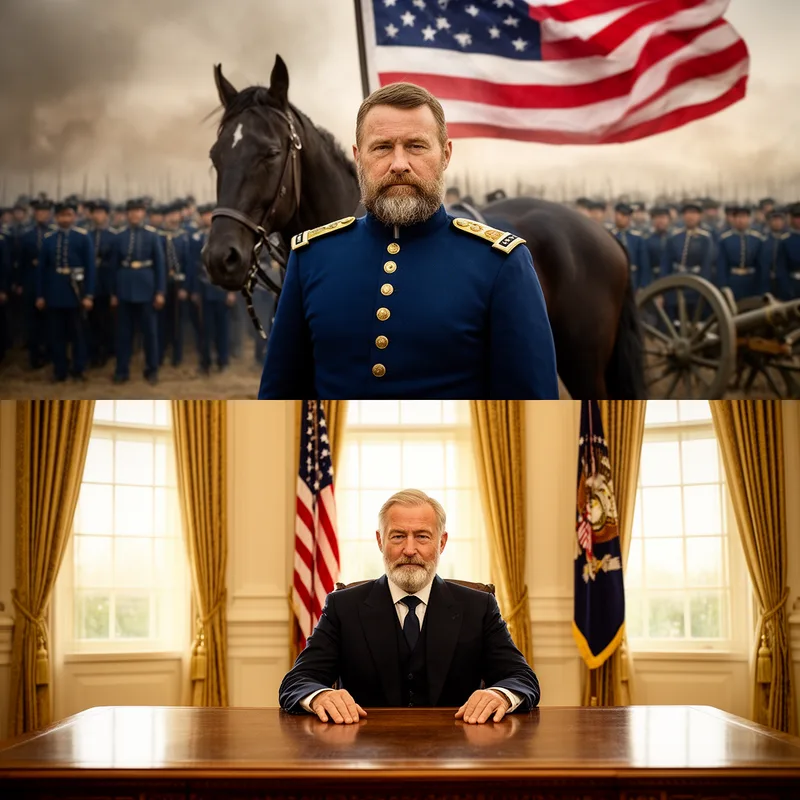
Ulysses S. Grant
 9
4.2

- proper noun
- /juˈlɪsɪz ɛs grænt/
- Many historians study the leadership style of Ulysses S. Grant.
- General Ulysses S. Grant
Examples
-
Ulysses S. Grant served as the 18th President of the United States from 1869 to 1877, focusing on Reconstruction efforts.
-
The presidency of Ulysses S. Grant was marked by efforts to stabilize the postwar nation.
-
Ulysses S. Grant led the Union Army to victory in the American Civil War.
-
President Ulysses S. Grant led the Union to victory in the Civil War.
-
Did Ulysses S. Grant really drink whiskey during battles?
-
In 1865, General Ulysses S. Grant accepted the surrender of Robert E. Lee at Appomattox Court House, effectively ending the Civil War.
-
As a skilled military leader, Ulysses S. Grant played a crucial role in leading the Union armies during the American Civil War.
Synonyms
 86
3.3
The 18th president of the United States who led the Union Army in the Civil War
 11
5.3
American army leader who led the Union in the Civil War and later became the 18th President
Surface Forms
Morphology
Ulysses + S. + Grant
This is a proper name referring to a specific historical person, so its meaning (the 18th U.S. President and Civil War leader) cannot be derived from the constituent items. Knowing the words 'Ulysses', 'S.' or the common noun/verb 'grant' does not allow a B1 learner to infer the referent or biographical role; proper names are essentially arbitrary and language-specific, making this expression opaque to learners.
Etymology
Ulysses S. Grant may have got his name from a simple mistake when he was young: he was born Hiram Ulysses Grant, but a local politician sent his name to a military school as Ulysses S. Grant, adding the S probably from his mother's maiden name 'Simpson', and Grant kept it. He later led the Union army to victory in the Civil War and became the 18th president, so today Ulysses S. Grant is the name we use for that famous general and president.