
Ulmus crassifolia
- noun
- /ˈʌlməs ˌkræsɪˈfoʊliə/
- Specialized
 :
olmo crassifolia
:
olmo crassifolia
- The Ulmus crassifolia is commonly found in Texas woodlands and is known as the cedar elm.
Examples
-
Researchers are studying Ulmus crassifolia to find resistance to elm disease.
-
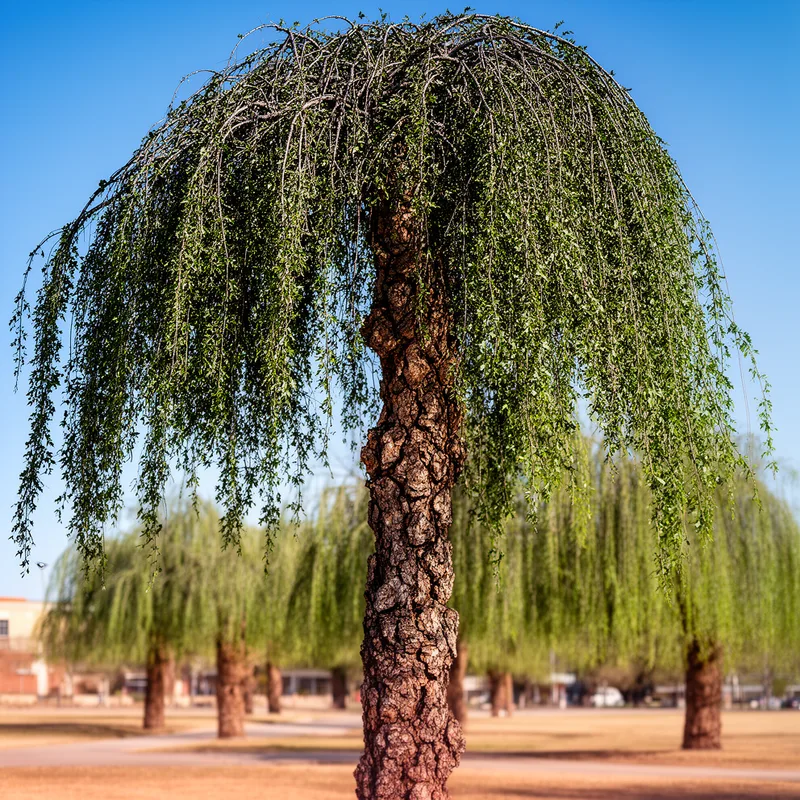
The Ulmus crassifolia is known for its unique corky ridges.
-
Many city parks have planted Ulmus crassifolia because of its drought tolerance.
-
In the park, I spotted several Ulmus crassifolia trees.
-
The Ulmus crassifolia tree is commonly found in parks across Texas, providing ample shade.
-
In southern gardens, the Ulmus crassifolia is prized for its beautiful pendulous branches.
-
Known for its hardy nature, the Ulmus crassifolia thrives in drought-prone areas of the southern United States.
Synonyms

A medium-sized tree with rough corky bark and drooping branches
Surface Forms
Morphology
Ulmus + crassifolia
This is a Latin taxonomic binomial (a proper scientific name), not a phrase built from common English words; its meaning (a particular elm species with corky ridges) is specialized and not predictable from the English knowledge of the parts. The second element 'crassifolia' is not a normal English word and requires knowledge of Latin roots to decode, so a B1 learner who only knows the constituent forms would not be able to derive the species meaning.
Etymology
Ulmus crassifolia comes from Latin: Ulmus means 'elm' and crassifolia means 'thick leaves'. So the name gives a clear image of an elm with thicker leaves and bumpy ridges on its branches, which is why it is used for the cedar elm.

